|
Ancient Egyptian
|
|
 |
|
|
|

Price :
Contact Dealer
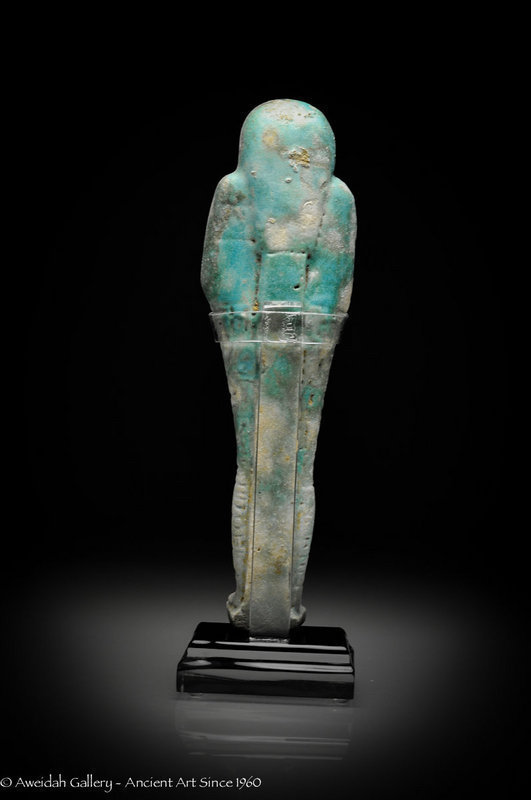
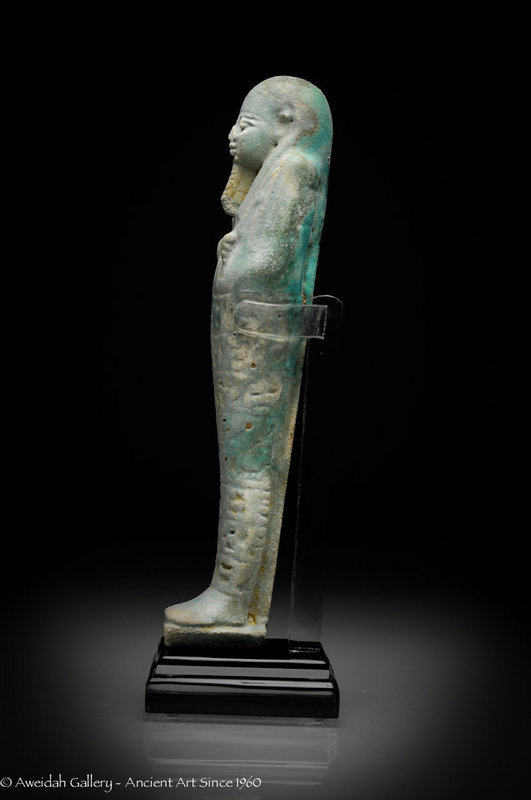
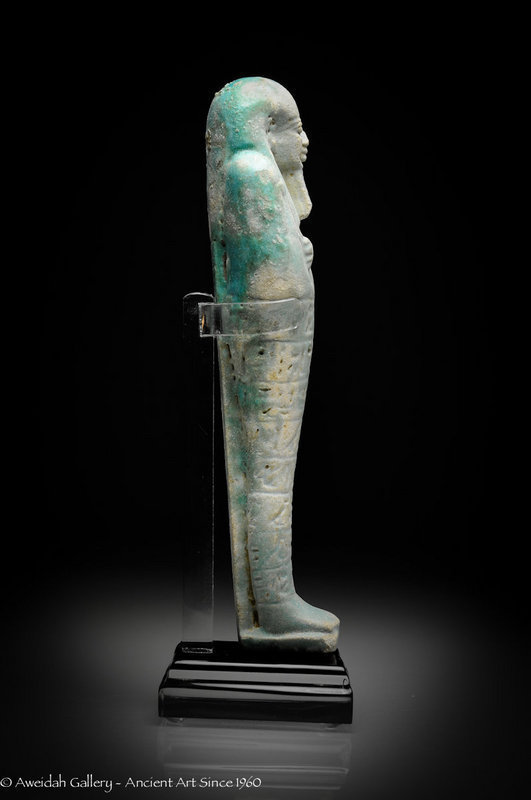
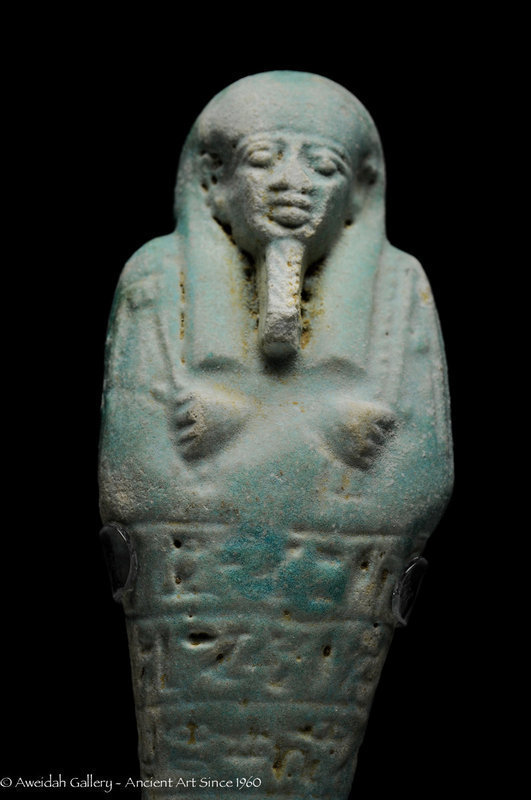
Large ancient Egyptian soft blue faience Ushabti with defined features, standing with braided beard, arms crossed, hands holding pick and hoe, wearing a tripartite wig and More »
Large ancient Egyptian soft blue faience Ushabti with defined features, standing with braided beard, arms crossed, hands holding pick and hoe, wearing a tripartite wig and bearing eight lines of hieroglyphic inscription
Dated from, 600 – 300 BC
Measurements: Height: 19 cm - Diameter: 5.5 cm - Height on stand: 21.5 cm
The Ushabti is nicely mounted on a custom plexi-glass “Lucite†display stand of high quality
Ushabtis:
Also known as shabtis or shawabties. Probably the most collected artifacts of ancient Egypt. These magical statues were found in tombs, and hold the role of being servants. They were designed to accompany the deceased into paradise, to comply with requests from the gods.
Faience:
Material used by the ancient Egyptians, composed of a quartz or crystal base, covered with a vitreous, alkaline compound with calcium silicates to provide the diversity of colors and the glassy finish
Condition: Intact, very good condition
Provenance: Aweidah's collection before 1970 - Registered at the IAA
ALL ITEMS THAT WE OFFER FOR SALE COME WITH A CERTIFICATE OF AUTHENTICITY # 8726
« Less
|
|
Ancient Egyptian
|
|
|
|
|
| Vendor Details |
Close |
| Contact Info : |
| AWEIDAH GALLERY |
| 4 Via Dolorosa street |
| P.O.Box 60031 |
| Jerusalem |
| Israel |
| Email : maweidah@netvision.net.il |
| Phone : +972-545-216055 |
|
|
|
|
|
|

Price :
Contact Dealer
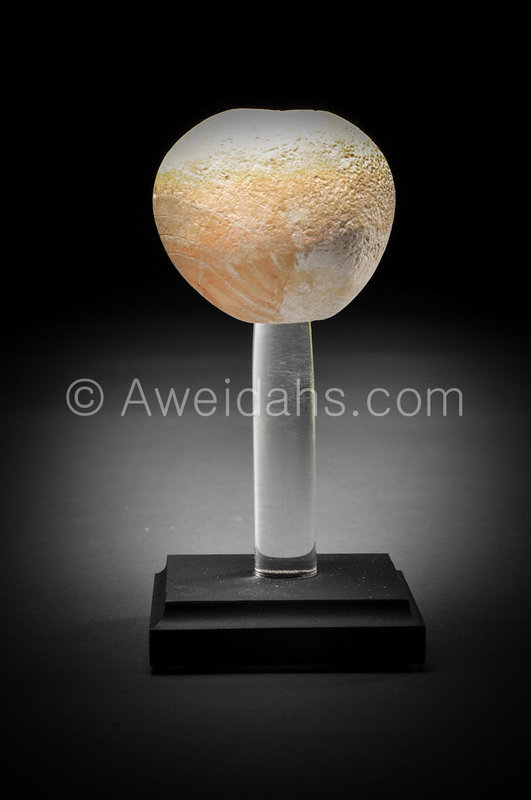
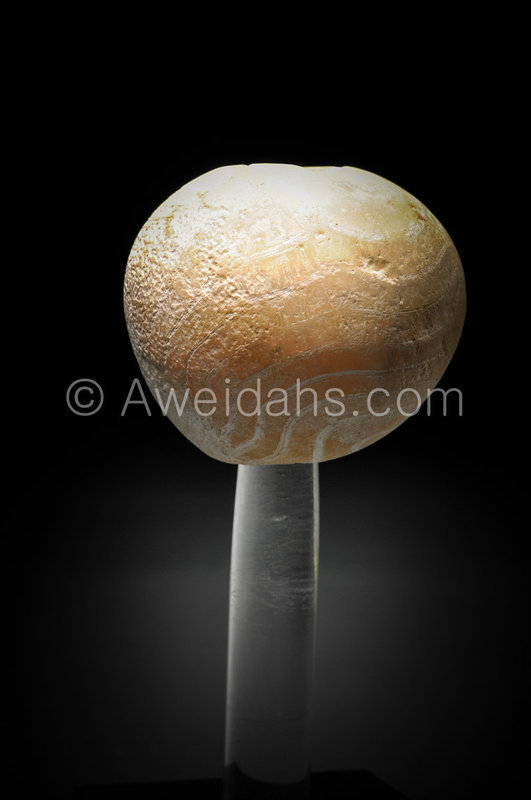
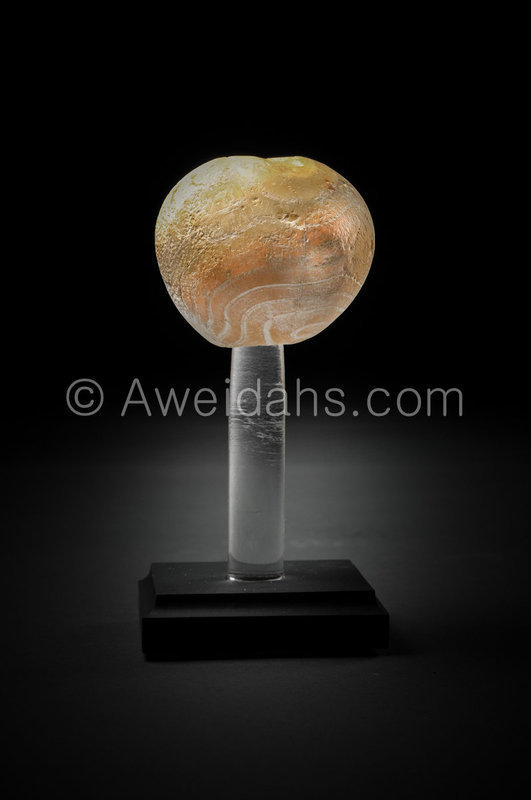
ALBASTER STONE MACE-HEAD
Egypt, Pre-dynastic; Naqada II or III, c. 3600 - 3100 B.C.
Rounded-shaped alabaster stone mace-head with cylindrical drill hole in the center. More »
ALBASTER STONE MACE-HEAD
Egypt, Pre-dynastic; Naqada II or III, c. 3600 - 3100 B.C.
Rounded-shaped alabaster stone mace-head with cylindrical drill hole in the center. Was once attached to a wooden shaft and used as a weapon to strike at an enemy
Dimensions:
Height: 5 cm
Diameter: 6 cm
Height on stand: 13 cm
The mace head is nicely mounted on a plexi-glass display stand
Condition: Good condition as shown.
ALL ITEMS THAT WE OFFER FOR SALE COME WITH A CERTIFICATE OF AUTHENTICITY
A mace is a blunt weapon, a type of club or virge—that uses a heavy head on the end of a handle to deliver powerful blows. A mace typically consisted of a strong, heavy, wooden or metal shaft, often reinforced with metal, featuring a head made of stone, copper, bronze, iron, or steel.
A rounded pear form of mace head known as a "piriform" replaced the disc mace in the Naqada II period of pre-dynastic Upper Egypt (3600-3250 BC) and was used throughout the Naqada III period (3250-3100 BC). Similar mace heads were also used in Mesopotamia around 2450-1900 BC. The Assyrians used maces probably about 19th century B.C. and in their campaigns; the maces were usually made of stone or marble and furnished with gold or other metals, but were rarely used in battle unless fighting heavily armored infantry.
# 545748
« Less
|
|
Ancient Egyptian
|
|
|
|
|
| Vendor Details |
Close |
| Contact Info : |
| AWEIDAH GALLERY |
| 4 Via Dolorosa street |
| P.O.Box 60031 |
| Jerusalem |
| Israel |
| Email : maweidah@netvision.net.il |
| Phone : +972-545-216055 |
|
|
|
|
|
|

Price :
Contact Dealer
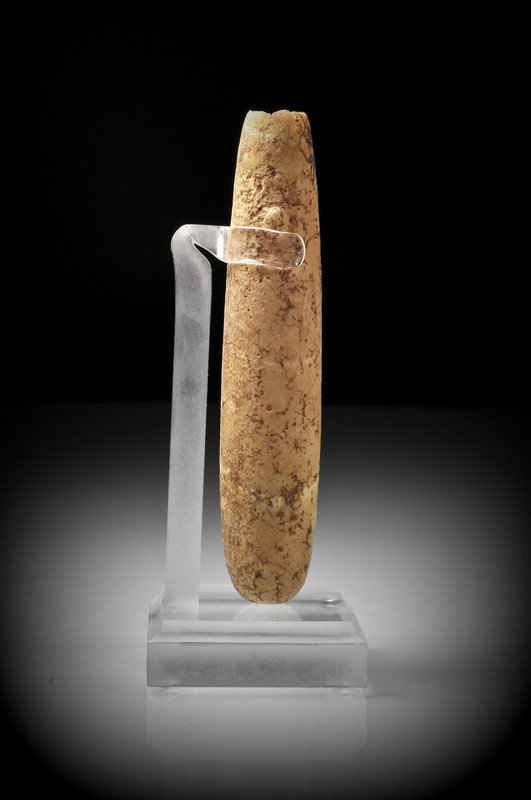
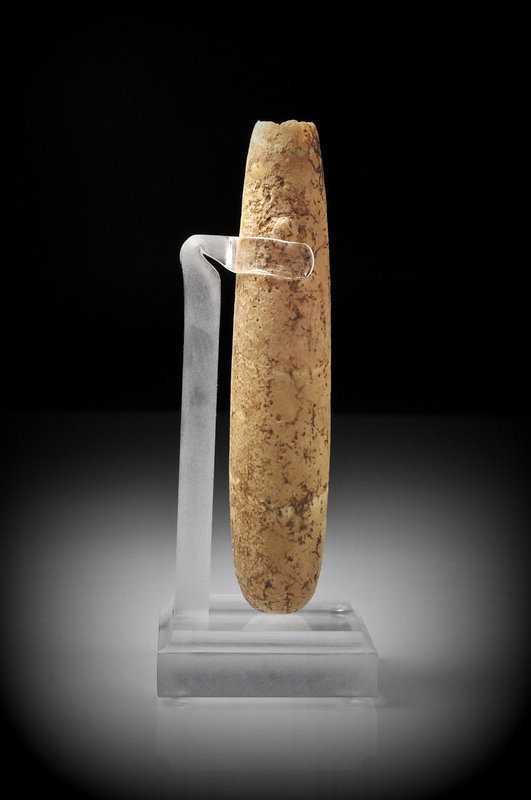
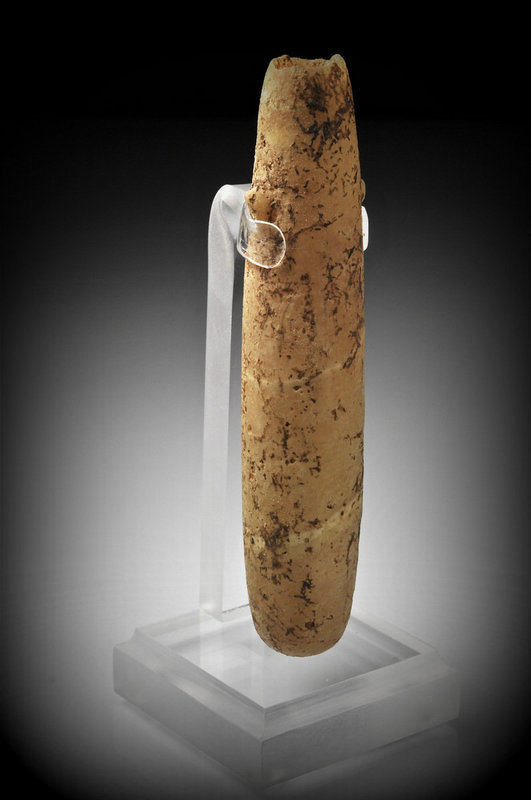
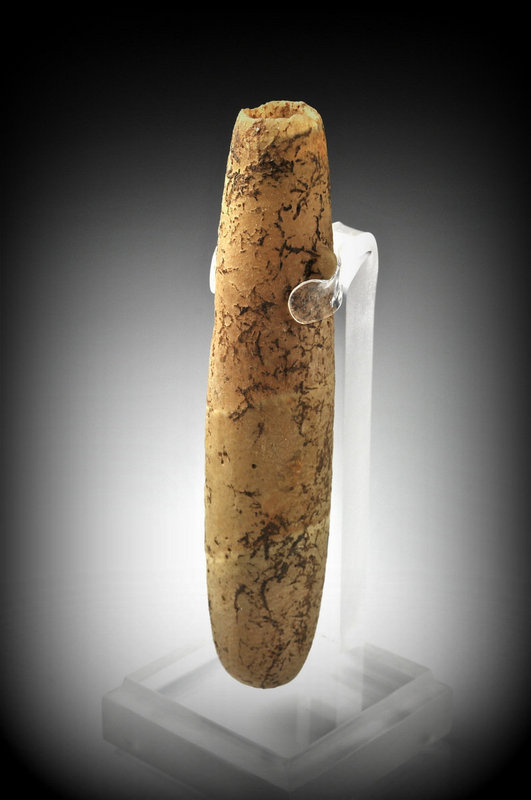
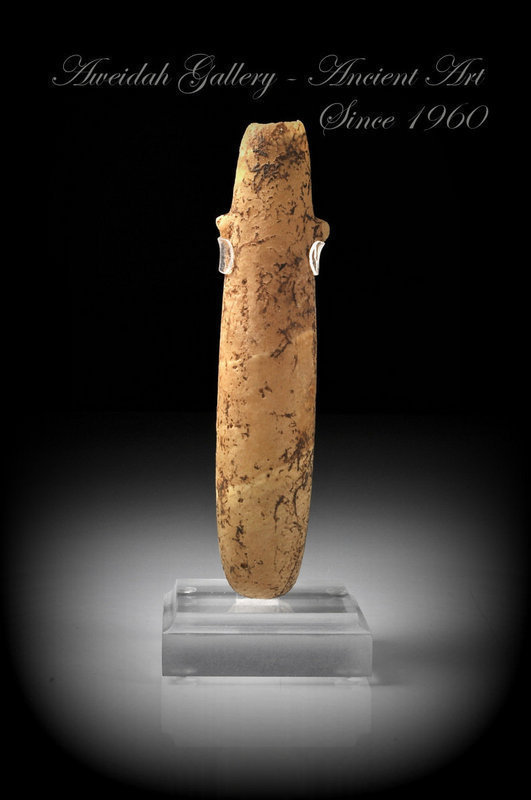
Ancient Egyptian elegant cosmetic vessel, in slender form tapering to a narrow base with two small lug handles
This a type of Alabastron vessels was used in the ancient More »
Ancient Egyptian elegant cosmetic vessel, in slender form tapering to a narrow base with two small lug handles
This a type of Alabastron vessels was used in the ancient world for holding oil, especially perfume or massage oils. They originated in ancient Egypt as containers carved from alabaster – hence the name – but spread via ancient Greece to other parts of the classical world.
Most types of alabastron have a narrow body with a rounded end, a narrow neck and a broad, splayed mouth. They were often left without handles, but some types were equipped with ear-shaped projections or lugs into which holes were punched. Strings were then put through these holes for easy mobility.
The alabaster that this vessel is carved from is also called "calcareous sinter", a type of travertine. It is cream-grey in color. This stone can also be called "calcite", which simply refers to Egyptian alabaster. It was an abundant resource in Egypt's eastern desert. This material was commonly used by the Egyptian craftsmen to make stone vessels. This type of rock is formed by "the chemical precipitation of water saturated with dissolved calcium carbonate.
Due to the availability of alabaster, Egyptians became masters of stone-carving. It is a soft stone that is easy to work into delicate shapes and polishes very well. When cut thinly, it can be translucent. Alabaster decorative inlays and jewelry were found in the tomb of King Tutankhamun. The stone-vessel industry blossomed in the Nile Valley, not in the eastern desert, due to smaller and more accessible alabaster deposits. After the value of the stone was fully realized, Egyptians began transporting blocks of alabaster from the deserts to the valley. The stone-vessel industry peaked during the Egyptian Early Dynastic Period.
Dated from, 1550 - 1000 BC
Measurements: Height: 15 cm - Diameter: 3 cm - Height on stand: 17 cm
Nicely displayed on a plexi-glass custom hand-made stand of high quality
Condition: Good condition with nice earthy patina, untouched as found!
Literature
Ancient Egyptian alabaster is a type of white translucent stone used in statuary, architecture, altars and vessels. It is a form of limestone more accurately described as travertine. It occurs principally in the area of Middle Egypt, the main Pharaonic source being Hatnub about ten miles southeast of the New Kingdom city at El-Amarina. 
These vessels contained oils and other unguents that had been perfumed with various aromatic herbs and spices, for use on the living body or as sacred oils to anoint the mummy in the tomb at various stages of the ritual ‘opening of the mouth’ ceremony. From the early Dynastic period onwards alabaster was increasingly used for the production of cosmetic and funerary vessels and the skilled craftsmen chose and shaped the stone to maximise the decorative effect of the natural colour and banding. 

Provenance; Aweidah's collection before 1970 - Registered at the IAA
All items that we offer for sale come with a certificate of authenticity
#5859
« Less
|
|
Ancient Egyptian
|
|
|
|
|
| Vendor Details |
Close |
| Contact Info : |
| AWEIDAH GALLERY |
| 4 Via Dolorosa street |
| P.O.Box 60031 |
| Jerusalem |
| Israel |
| Email : maweidah@netvision.net.il |
| Phone : +972-545-216055 |
|
|
|
|
|
|

Price :
$2500.00
Egyptian sandstone statue of a pharaoh, probably Ptolemaic, circa 3rd or 2nd century BCE. Height 130 mm (5 inches). Intact. Ex very old English collection, found in Egypt More »
Egyptian sandstone statue of a pharaoh, probably Ptolemaic, circa 3rd or 2nd century BCE. Height 130 mm (5 inches). Intact. Ex very old English collection, found in Egypt most likely at the end of 18th century. « Less
|
|
Ancient Egyptian
|
|
|
|
|
| Vendor Details |
Close |
| Contact Info : |
| Ishtar Antares |
| Email : antarion@volja.net |
| Phone : ++386326600 |
|
|
|
|
|
|

Price :
Contact Dealer
Carved wood mummy mask with angular features, the ears, eyes and mouth painted in black over a pink ground. A few traces of polychrome ornament on the wig.
Masks were a More »
Carved wood mummy mask with angular features, the ears, eyes and mouth painted in black over a pink ground. A few traces of polychrome ornament on the wig.
Masks were a very important aspect of Ancient Egyptian burials. Together with the anthropoid coffin they provided the dead with a face in the afterlife. In addition they also enabled the spirit to recognize the body.
Mummy masks had more than one purpose. They were a part of the elaborate precautions taken by the ancient Egyptians to preserve the body after death. The protection of the head was of primary concern during this process. Thus, a face covering helped preserve the head, as well as providing a permanent substitute, in an idealized form presenting the deceased in the likeness of an immortal being. Specific features of a mask, including the eyes, eyebrows, forehead and other features, were directly identified with individual divinities, as explained in the Book of the Dead, Spell 151b. This allowed the deceased to arrive safely in the hereafter, and gain acceptance among the other divine immortals in the council of the great god of the dead, Osiris. Though such masks were initially made for only the royalty, later such masks were manufactured for the elite class for both males and females.
The masks of both men and women had over-exaggerated eyes and often enigmatic half smiles. These objects were then framed by long, narrow, tripartite wigs held securely by a decorated headband.
Normal stable age splits and some minor losses. Black lucite plaque mount.
H: 22 cm (8-3/4inch)
Provenance:
Ex. Sothebys, NYC, sale 5788, lot 342, Dec. 2nd, 1988.
« Less
|
|
Ancient Egyptian
|
|
|
|
|
| Vendor Details |
Close |
| Contact Info : |
| S.A. Gallery |
| www.sagallery.com |
| Tivoli Victoria Hotel-Loja 1 |
| Vilamoura |
| Portugal |
| Email : info@sagallery.com |
|
|
|
|
|
|

Price :
Contact Dealer
Polychrome wood mummy mask, wearing a broad beaded collar and striped tripartite wig surmounted by a scarab. The brownish-red face with black eyebrows and cosmetic lines. Two More »
Polychrome wood mummy mask, wearing a broad beaded collar and striped tripartite wig surmounted by a scarab. The brownish-red face with black eyebrows and cosmetic lines. Two plank reverse construction, with gesso covered linen surface, polychrome painted.
Masks were a very important aspect of Ancient Egyptian burials. Together with the anthropoid coffin they provided the dead with a face in the afterlife. In addition they also enabled the spirit to recognize the body.
Mummy masks had more than one purpose. They were a part of the elaborate precautions taken by the ancient Egyptians to preserve the body after death. The protection of the head was of primary concern during this process. Thus, a face covering helped preserve the head, as well as providing a permanent substitute in an idealized form presenting the deceased in the likeness of an immortal being. Specific features of a mask, including the eyes, eyebrows, forehead and other features, were directly identified with individual divinities, as explained in the Book of the Dead, Spell 151b. This allowed the deceased to arrive safely in the hereafter, and gain acceptance among the other divine immortals in the council of the great god of the dead, Osiris. Though such masks were initially made for only the royalty, later such masks were manufactured for the elite class for both males and females.
The masks of both men and women had over-exaggerated eyes and often enigmatic half smiles. These objects were then framed by long, narrow, tripartite wigs held securely by a decorated headband.
Mostly stable surface cracks with some areas of small losses.
H: 51cm (20 inch)
Provenance:
Sothebys, NYC, Sale 5788, lot 341, Dec. 2nd, 1988.
For additional information please contact S.A. Gallery. « Less
|
|
Ancient Egyptian
|
|
|
|
|
| Vendor Details |
Close |
| Contact Info : |
| S.A. Gallery |
| www.sagallery.com |
| Tivoli Victoria Hotel-Loja 1 |
| Vilamoura |
| Portugal |
| Email : info@sagallery.com |
|
|
|
|
|
|

Price :
$250.00
Early faience amulet of the Egyptian god Sobek, the crocodile god. Very highly worshiped at temples at Fayoum, and dating to the 13th Dynasty, Ca. 1750 BC. According to Mr. More »
Early faience amulet of the Egyptian god Sobek, the crocodile god. Very highly worshiped at temples at Fayoum, and dating to the 13th Dynasty, Ca. 1750 BC. According to Mr. Mitry's notes, this example was found at Fayoum, Lower Egypt. Measuring 21 mm, intact and excellent. Category:Egyptian Material:Faience Dimensions:21 mm Condition:Intact « Less
|
|
Ancient Egyptian
|
|
|
|
|
| Vendor Details |
Close |
| Contact Info : |
| Artemis Gallery Ancient Art |
| Email : info@artemisgallery.com |
| Phone : 1 (720) 890-7700 |
|
|
|
|
|
|

Price :
$695.00
From ancient Egypt, Third Intermediate - Late Period, 21st-30th Dynasty, 1070-332 B.C. Turquoise-glazed faience composition ram amulet, single-sided, with details in added More »
From ancient Egypt, Third Intermediate - Late Period, 21st-30th Dynasty, 1070-332 B.C. Turquoise-glazed faience composition ram amulet, single-sided, with details in added black. 1-1/2"W, intact/excellent condition. ca 1070-332 B.C. Category:Egyptian Period:21st-30th Dynasty Material:Faience Dimensions:1-1/2"W Condition:Intact « Less
|
|
Ancient Egyptian
|
|
|
|
|
| Vendor Details |
Close |
| Contact Info : |
| Artemis Gallery Ancient Art |
| Email : info@artemisgallery.com |
| Phone : 1 (720) 890-7700 |
|
|
|
|
|
|

Price :
$795.00
Royal scarab with symbols of beauty "nefer", lordship "neb", two cakes or bread for the letter T, protection from Ureaus the royal cobra, with cartouche of King Thothmes III. More »
Royal scarab with symbols of beauty "nefer", lordship "neb", two cakes or bread for the letter T, protection from Ureaus the royal cobra, with cartouche of King Thothmes III. "Praise and protection to the beautiful Pharaoh Thothmes (or Thutmoses) III " The cartouche translates as Men-Kheper-Ra. Found in Gorna, XVIII Dynasty, Ca 1504 to 1450 BC. The New Kingdom (extending from 1550-1070 B.C.) was the most glorious period in ancient Egyptian history. 17 x 11mm, intact/ excellent condition, save small ancient chip. Ca 1504 to 1450 BC Category:Egyptian Period:XVIII Dynasty Material:Steatite Dimensions:17 x 11mm Condition:Intact « Less
|
|
Ancient Egyptian
|
|
|
|
|
| Vendor Details |
Close |
| Contact Info : |
| Artemis Gallery Ancient Art |
| Email : info@artemisgallery.com |
| Phone : 1 (720) 890-7700 |
|
|
|
|
|
|
Price :
$1950.00
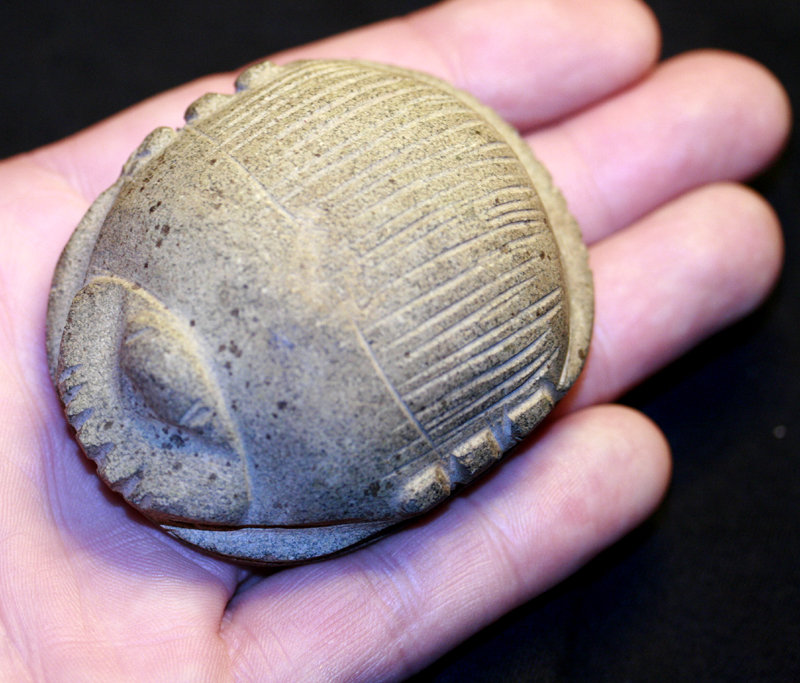
Massive Egyptian heart scarab, dating c. 1500-1200 BC
The scarab meassure astonishing 67 x 57 mm. and is c. 28 mm. thick! The scarab is carved in hard grey stone. A More »
Massive Egyptian heart scarab, dating c. 1500-1200 BC
The scarab meassure astonishing 67 x 57 mm. and is c. 28 mm. thick! The scarab is carved in hard grey stone. A detailed carving and very attractive in hand.
The largest and most massive heart scarab we've ever handled.
Condition: Extremely Fine! A few spots with some corrosion, but very sharp details.
Ex. New York dealer, guaranteed authentic for life! « Less
|
|
Ancient Egyptian
|
|
|
|
|
| Vendor Details |
Close |
| Contact Info : |
| Senatus Consulto |
| København- |
| Denmark |
| Email : senatusconsulto@tdcadsl.dk |
| Phone : 004535352620 |
|
|
|
|
|
|
|
|

|