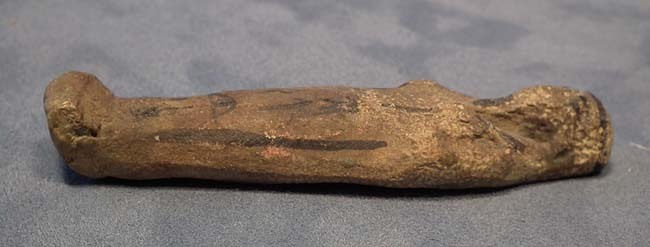
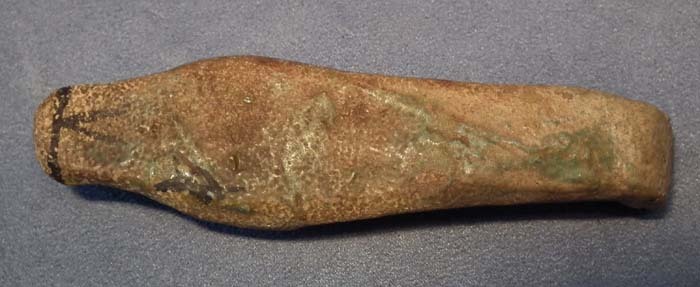
|
Ancient Egyptian
|
|
 |
|
|
|

Price :
$950.00
New Kingdom, 19th-20th Dynasty, 1307-1070 B.C.
A narrow, cylindrical bodied cup tapering to a conical foot. Light green in color with hieroglyphic inscriptions written in More »
New Kingdom, 19th-20th Dynasty, 1307-1070 B.C.
A narrow, cylindrical bodied cup tapering to a conical foot. Light green in color with hieroglyphic inscriptions written in dark blue on the body. Found in Samaria. In very good and original condition.
1.80 inches (4.8 cms) high
Custom lucite stand, shipping and Certificate of Authenticity included in price.
Export Approval from the Israel Antiquities Authority.
**********
Votive Cup: Vessels used for a variety of ritual functions and offerings, generally used for oils and other substances.
Egyptian faience is a non-clay ceramic displaying surface vitrification which creates a bright blue-green luster. It is called 'Egyptian faience' to distinguish it from Faience which refers to the ambiguous term frit and a type of pottery now know as majolica: a tin glazed ware originally produced in Faenza in northern Italy.
Egyptian faience, both locally produced and exported from Egypt, occurs widely in the ancient world, and is well known from Mesopotamia, the Mediterranean and in northern Europe as far away as Scotland « Less
|
|
Ancient Egyptian
|
|
|
|
|
| Vendor Details |
Close |
| Contact Info : |
| Biblical Artifacts |
| 45 Jaffa Gate |
| P.O. Box 14646 |
| Jerusalem |
| Israel |
| Email : sami@biblicalartifacts.com |
| Phone : 972 2 583 7606 |
|
|
|
|
|
|

Price :
$1350.00
Early Bronze Age II; c. 3300-2700 B.C.
An Abydos war jug with ovoid body, cylindrical neck, flat base and a handle from neck to shoulder. Terracotta with red slip. Found More »
Early Bronze Age II; c. 3300-2700 B.C.
An Abydos war jug with ovoid body, cylindrical neck, flat base and a handle from neck to shoulder. Terracotta with red slip. Found in Jericho. Very nice condition with minor chip on rim.
10 x 4.5 inches (26 x 12 cms)
Shipping and Certificate of Authenticity included in price.
Export Approval from Israel Antiquities Authority
Bibliography:
Ruth Amiran, “Ancient Pottery of the Holy Landâ€, (Rutgers University Press, 1970) , p.74-76.
**********
Abydos ware (a-BY-dos ware). Pottery of Canaanite (Syro-Palestinian) origin found in the royal tombs of the First and Second Dynasties (The Old Kingdom) at Abydos, Saqqara, Abusir el-Melek, and other sites in Upper Egypt, dating to Early Bronze Age II (3300-2700 BCE). The pottery, often red-rose slipped and burnished or painted with geometric motifs, includes jugs, bottles, and jars. Most common are the red-slipped jugs, some of a hard-baked "metallic" quality, with handles attached to the rim and a typical stamped base. This pottery class took its name from Abydos, the first site at which it was found, in Upper Egypt. « Less
|
|
Ancient Egyptian
|
|
|
|
|
| Vendor Details |
Close |
| Contact Info : |
| Biblical Artifacts |
| 45 Jaffa Gate |
| P.O. Box 14646 |
| Jerusalem |
| Israel |
| Email : sami@biblicalartifacts.com |
| Phone : 972 2 583 7606 |
|
|
|
|
|
|

Price :
$1600.00
Late Bronze Age; c. 1550-1200 B.C.
The white slip terracotta vessel consists of a slightly ovoid body and wide, subtly flared neck. A single handle from shoulder to neck More »
Late Bronze Age; c. 1550-1200 B.C.
The white slip terracotta vessel consists of a slightly ovoid body and wide, subtly flared neck. A single handle from shoulder to neck of vessel. In very good condition and extremely rare.
5.10 inches (12.6 cms) high
Export Approval from Israel Antiquities Authority.
*********
Egyptian pottery of this period were found in Canaan indicating the close cultural and commercial contacts between Egypt and the Holy Land during late bronze age .
{When the Israelites arrived in Canaan in 1406 BC they had no material culture of their own since they had been living in the Sinai as nomads for the previous 40 years. What is more, those with craft skills learned in Egypt had died in the wilderness. As a result, the Israelites purchased their pottery, tools and weapons from the Canaanites making it difficult to distinguish Israelites from Canaanites until the Israelites began making their own material items ca. 1200 BC} B A R 2008.
Late Bronze Age (about 1550-1200 B.C.) This period generally coincides with the vibrant New Kingdom period in Egypt when Palestine primarily was under Egyptian control, a rule that became more concentrated and demanding toward the end of the period. Canaan also maintained extensive trade connections with Aegean and northeastern Mediterranean powers.
« Less
|
|
Ancient Egyptian
|
|
|
|
|
| Vendor Details |
Close |
| Contact Info : |
| Biblical Artifacts |
| 45 Jaffa Gate |
| P.O. Box 14646 |
| Jerusalem |
| Israel |
| Email : sami@biblicalartifacts.com |
| Phone : 972 2 583 7606 |
|
|
|
|
|
|

Price :
$460.00
New Kingdom, 1567-1085 B.C.
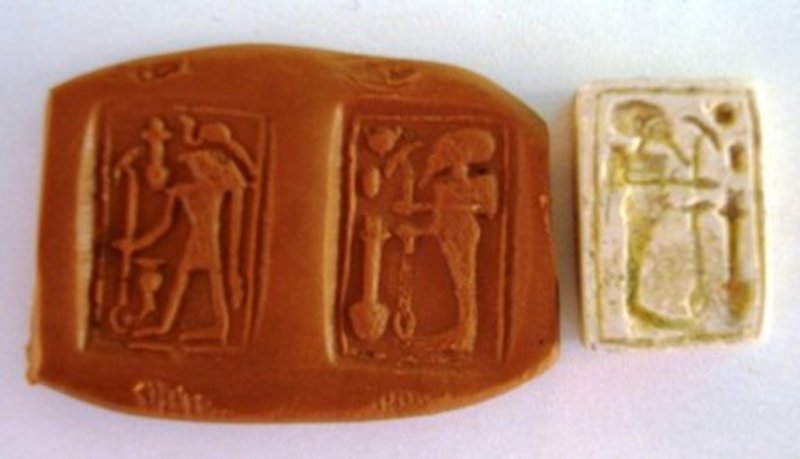
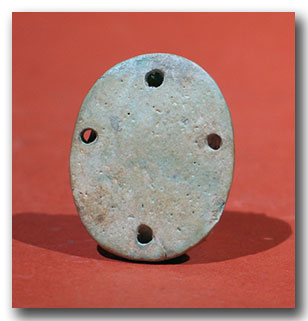
This Egyptian plaque is inscribed on one side with the falcon-headed god Re, holding a was-scepter and on the other side with the god Ptah, More »
New Kingdom, 1567-1085 B.C.
This Egyptian plaque is inscribed on one side with the falcon-headed god Re, holding a was-scepter and on the other side with the god Ptah, also holding a was-scepter. These two gods are the main divinities of the Heliopolis in the Memphis area suggesting the plaque originated in that area. Very good condition.
15 x 10 mm.
Shipping and Certificate of Authenticity included in price.
Export Approval from the Antiquities Authority in Israel. « Less
|
|
Ancient Egyptian
|
|
|
|
|
| Vendor Details |
Close |
| Contact Info : |
| Biblical Artifacts |
| 45 Jaffa Gate |
| P.O. Box 14646 |
| Jerusalem |
| Israel |
| Email : sami@biblicalartifacts.com |
| Phone : 972 2 583 7606 |
|
|
|
|
|
|

Price :
$385.00
c. 1720-1570 B.C.
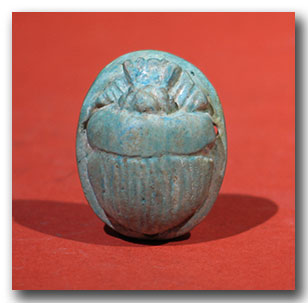
A steatite scarab with various symmetrically placed hieroglyphs carved on the underside to allow the scarab to function as a stamp seal. The hieroglyphs More »
c. 1720-1570 B.C.
A steatite scarab with various symmetrically placed hieroglyphs carved on the underside to allow the scarab to function as a stamp seal. The hieroglyphs chosen were selected for their protective meaning such as nefer-sign, oudjat-sign, shen-sign and the crown of Lower Egypt therefore giving the scarab seal an amuletic quality. On the top, under the two "angle" sign you can read the beginning of the a-n-r formula, which is most probably connection with the worship of the god Re. This piece is very representative of the Canaanite production during the Hyksos Period and is in very good condition.
Shipping and Certificate of Authenticity included in price.
Export Approval from Israel Antiquities Authority.
*********
The Hyksos Period in Egypt occurred during the Second Intermediate Period and is a time during which a culture from the Levant occupied and ruled much of northern Egypt. The term Hyksos is the name given to these peoples by the Egyptians. Accordingly, it literally translates to “Rulers of Foreign Landsâ€. During this period trade with the Aegean, the Levant and the kingdom of Kush was extensive encouraging the transmission of goods as well as ideas. « Less
|
|
Ancient Egyptian
|
|
|
|
|
| Vendor Details |
Close |
| Contact Info : |
| Biblical Artifacts |
| 45 Jaffa Gate |
| P.O. Box 14646 |
| Jerusalem |
| Israel |
| Email : sami@biblicalartifacts.com |
| Phone : 972 2 583 7606 |
|
|
|
|
|
|
Price :
$3250.00
Late Period, c. 600-300 B.C.
The deity is depicted seated frontally on an integral plinth with a hand resting on each knee, his tail wrapped around to the right side. As More »
Late Period, c. 600-300 B.C.
The deity is depicted seated frontally on an integral plinth with a hand resting on each knee, his tail wrapped around to the right side. As a guardian deity Bes is one of the few Egyptian gods to be regularly depicted in a frontal position. The facial features are finely carved and depict the god with a striated mane surrounding a small mouth. His cheeks are full and the nose is small yet bulbous. The eyes are partially closed above which sit large eyebrows that would have originally been inlaid. Small ears protrude from either side of the head and he wears a modius. This piece is in excellent condition with the vein of the stone adding to its aesthetic appeal.
2.95 x 1.26 inches (7.5 x 3.2 cms)
Export Approval from Israel Antiquities Authority
**************
Bes was an Egyptian deity of protection and the iconography originally referred to several different protective deities in the Egyptian pantheon, later amalgamated into a single figure. In addition to warding off evil spirits he was also closely associated with the protection of women and children and came to be associated with protection during childbirth. « Less
|
|
Ancient Egyptian
|
|
|
|
|
| Vendor Details |
Close |
| Contact Info : |
| Biblical Artifacts |
| 45 Jaffa Gate |
| P.O. Box 14646 |
| Jerusalem |
| Israel |
| Email : sami@biblicalartifacts.com |
| Phone : 972 2 583 7606 |
|
|
|
|
|
|

Price :
$400.00
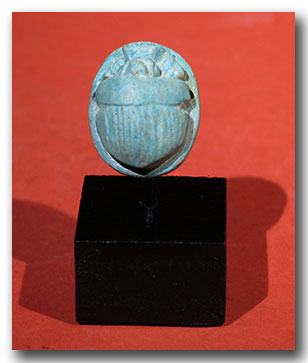
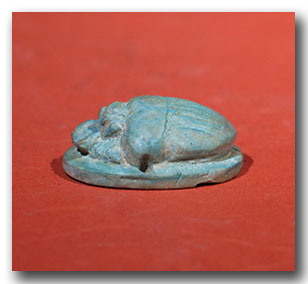
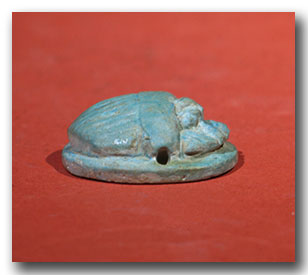
Fine head details, ribbed wings, on integral base with three holes for attachment.
Fine head details, ribbed wings, on integral base with three holes for attachment. « Less
|
|
Ancient Egyptian
|
|
|
|
|
| Vendor Details |
Close |
| Contact Info : |
| artemission.com |
| Email : info@artemission.com |
| Phone : contact via E-Mail |
|
|
|
|
|
|

Price :
$600.00
Middle Kingdom; c. 2000-1650 B.C.
This lot consists of three steatite scarabs with hieroglyphic inscriptions and one extremely rare amethyst scaraboid.
In varying More »
Middle Kingdom; c. 2000-1650 B.C.
This lot consists of three steatite scarabs with hieroglyphic inscriptions and one extremely rare amethyst scaraboid.
In varying conditions and sizes. Found in the Holy Land.
Worldwide shipping and Certificate of Authenticity Included in Price.
Export Approval from the Israel Antiquities Authority. « Less
|
|
Ancient Egyptian
|
|
|
|
|
| Vendor Details |
Close |
| Contact Info : |
| Biblical Artifacts |
| 45 Jaffa Gate |
| P.O. Box 14646 |
| Jerusalem |
| Israel |
| Email : sami@biblicalartifacts.com |
| Phone : 972 2 583 7606 |
|
|
|
|
|
|

Price :
$550.00
Authentic Ancient Egyptian circa 800-300 B.C pale blue-green glazed faience Ushabti - Shabti,
MEASUREMENTS: Height 6 cm (2 3/8 in).
More »
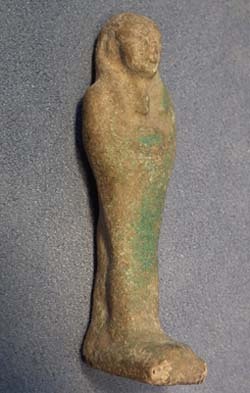
Authentic Ancient Egyptian circa 800-300 B.C pale blue-green glazed faience Ushabti - Shabti,
MEASUREMENTS: Height 6 cm (2 3/8 in).
CONDITION: in original condition showing its age. No repairs or restorations.
ALL ITEMS ARE GUARANTEED TO BE AUTHENTIC ANTIQUES AND NOT REPRODUCTIONS
ALL OUR ARTIFACTS ARE ACCOMPANIED BY A CERTIFICATE OF AUTHENTICITY
WE SHIP INTERNATIONALLY
« Less
|
|
Ancient Egyptian
|
|
|
|
|
| Vendor Details |
Close |
| Contact Info : |
| Hundred and One Antiques |
| Email : antiquarian101@gmail.com |
| Phone : 6139798250 |
|
|
|
|
|
|

Price :
$750.00
Authentic Ancient Egyptian Circa 800-300 B.C. faience Ushabti - Shabti with black painted details, with arms folded across the chest holding a crook and flail and More »
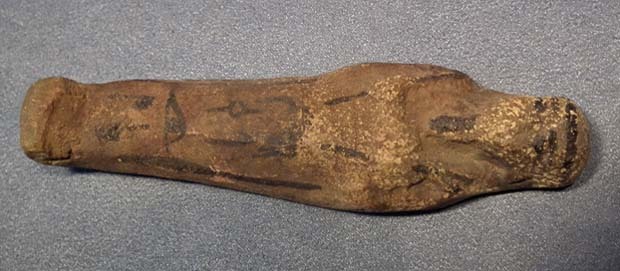
Authentic Ancient Egyptian Circa 800-300 B.C. faience Ushabti - Shabti with black painted details, with arms folded across the chest holding a crook and flail and hieroglyphics inscriptions on the front.
MEASUREMENTS: Height: approximately 10.8 cm (4 1/4 in).
CONDITION: No repairs or restoration with nice showing its age patina.
ALL ITEMS ARE GUARANTEED TO BE AUTHENTIC ANTIQUES AND NOT REPRODUCTIONS
ALL OUR ARTIFACTS ARE ACCOMPANIED BY A CERTIFICATE OF AUTHENTICITY
WE SHIP INTERNATIONALLY
« Less
|
|
Ancient Egyptian
|
|
|
|
|
| Vendor Details |
Close |
| Contact Info : |
| Hundred and One Antiques |
| Email : antiquarian101@gmail.com |
| Phone : 6139798250 |
|
|
|
|
|
|
|
|

|