|
Antiques
|
|
 |
|
|
|
Price :
Contact Dealer
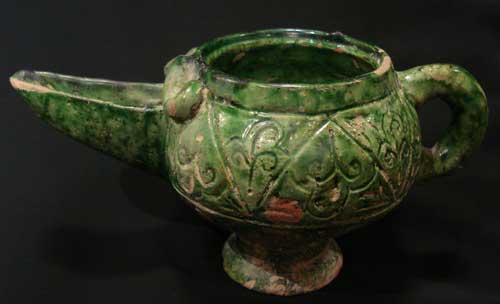
Glazed Oil Lamp - AMD.140, Origin: Central Asia, Circa: 700 AD to 1000 AD, Dimensions: 3.7" (9.4cm) high x 7.3" (18.5cm) wide, Collection: Islamic Art, Medium: Glazed More »
Glazed Oil Lamp - AMD.140, Origin: Central Asia, Circa: 700 AD to 1000 AD, Dimensions: 3.7" (9.4cm) high x 7.3" (18.5cm) wide, Collection: Islamic Art, Medium: Glazed Earthenware, Condition: Extra Fine. This stunning oil lamp has a globular body with an incised foliate design underneath the dark green glaze. The lamp rests on a cylindrical base which flares out at the bottom. It has an entirely open spout opposite a small loop handle. « Less
|
|
Ancient Near East
|
|
|
|
|
| Vendor Details |
Close |
| Contact Info : |
| Barakat Gallery |
| 405 North Rodeo Drive |
| Beverly Hills |
| California-90210 |
| USA |
| Email : barakat@barakatgallery.com |
| Phone : 310.859.8408 |
|
|
|
|
|
|

Price :
$625.00
FUKAGAWA MT FUJI MARK, one of a kind presentation vase. Subtle background florals of mauve orchids on soft blue ground. Signed, blue Fukagawa mark from 1900-1910. A More »
FUKAGAWA MT FUJI MARK, one of a kind presentation vase. Subtle background florals of mauve orchids on soft blue ground. Signed, blue Fukagawa mark from 1900-1910. A masterpiece of artistry.
Dimensions: 11"(28cm) height
6"(15cm) at mid body
3 1/2"(9cm) at base width
Condition: mint, no frits, chips or damage *Please view my Japanese studio pottery and other Arita porcelains « Less
|
|
Antique Vases
|
|
|
|
|
| Vendor Details |
Close |
| Contact Info : |
| Sherri Garner |
| Email : mzdragonwoman@aol.com |
| Phone : 7164178593 |
|
|
|
|
|
|
Price :
Contact Dealer
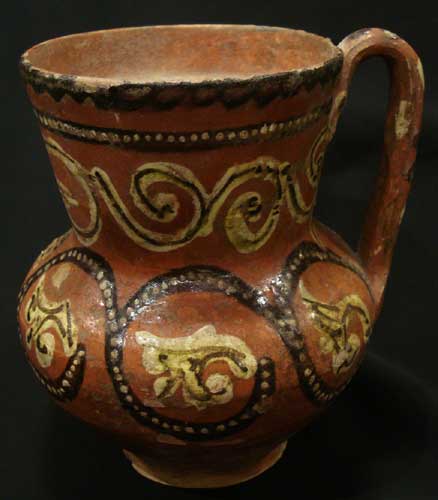
Slip Painted Nishapur Jug - AMD.141, Origin: Central Asia, Circa: 900 AD to 1000 AD, Dimensions: 6.1" (15.5cm) high x 5.5" (14.0cm) wide, Collection: Islamic Art, Style: More »
Slip Painted Nishapur Jug - AMD.141, Origin: Central Asia, Circa: 900 AD to 1000 AD, Dimensions: 6.1" (15.5cm) high x 5.5" (14.0cm) wide, Collection: Islamic Art, Style: Nishapur Ware, Medium: Buff Earthenware, Condition: Very Fine., The first indigenous Muslim dynasty to rule Iran following the Arab conquest, the Samanid Dynasty was founded in 819 A.D. by Saman- Khuda, a Persian vassal of the Abbasid Empire. However, not until the reign of Saman-Khuda’s great-grandson, Ismail I (892-907 A.D.), did Samanid power become extensive, eventually spreading outside of Iran and into Central Asia. The coins of the Samanids were used throughout North Asia, revealing their enormous influence on the region. Today, the Samanid Dynasty is renown as a time of cultural flourishing, especially in regards to the arts of poetry and pottery. The capital of Bukhara was also one of the cultural centers of the empire, along with the cities of Samarkand and Nishapur. Perhaps their most important influence on Islamic art was the Samanid innovation of slip painting that allowed for more refined, controlled glazed decorations on terracotta vessels and tiles. The Samanid Dynasty was a period of nationalism, where the Persian people regained power from the hands of foreign invaders. While Samanid power gradually waned throughout the 10th century in response to the rise of Turkic power in Central Asia and Afghanistan, during their rule the foundations of a native Iranian Islamic culture were firmly established. « Less
|
|
Ancient Near East
|
|
|
|
|
| Vendor Details |
Close |
| Contact Info : |
| Barakat Gallery |
| 405 North Rodeo Drive |
| Beverly Hills |
| California-90210 |
| USA |
| Email : barakat@barakatgallery.com |
| Phone : 310.859.8408 |
|
|
|
|
|
|

Price :
Contact Dealer
Inscribed with magic texts, these bowls were used to ward off evil spirits and protect family and property. Unearthed at relatively high levels of excavation, they were More »
Inscribed with magic texts, these bowls were used to ward off evil spirits and protect family and property. Unearthed at relatively high levels of excavation, they were neglected by the nineteenth century pioneers of Mesopotamian archaeology who were more interested in discovering palace foundations and large-scale sculpture. In more recent years however their importance has been recognised and they have been studied in-depth The incantations were written in a variety of Aramaic dialects including Jewish Aramaic, Mandaic and Syriac. There are also examples written in Pseudo-script, presumably by less literate scribes. Although the texts are not dated they are generally assigned to the late Sassanian/ early Islamic period (6th-8th century A.D.). Their main function was to trap evil spirits and they were often placed upside down at the corners of rooms, or built into foundations or cemeteries. The texts sometimes instruct them to be placed ‘at the four corners (of the room)’ for extra protection. The names of the clients for whom the bowls were made can be divided into two main categories- Semitic and Persian. However this is not always a reliable guide to their ethnicity. Jewish influence on the Mandaic inscriptions was minimal but is pronounced in the Aramaic incantations. Many of the scribes may have been Jewish or trained by Jews, and the Hebrew Bible is frequently quoted. « Less
|
|
Ancient Near East
|
|
|
|
|
| Vendor Details |
Close |
| Contact Info : |
| Barakat Gallery |
| 405 North Rodeo Drive |
| Beverly Hills |
| California-90210 |
| USA |
| Email : barakat@barakatgallery.com |
| Phone : 310.859.8408 |
|
|
|
|
|
|

Price :
$285.00
This is most unique and delightful hand crafted set of six KOKESHI type dolls, with truly elegant style and winsome charm.
Each doll is made of carefully selected wood, More »
This is most unique and delightful hand crafted set of six KOKESHI type dolls, with truly elegant style and winsome charm.
Each doll is made of carefully selected wood, individually painted with details to show off the grain on each doll. The tallest figure is 4.5 inches. Additionally, the dolls come with a black wooden stand, which is 14.5 inches in length, and signature plaque. Also included are the original wrapings and original decorative paper box.
Dimensions: 14.5 inches, stand
4.5 inches tallest carved figure 4.5 inches width of stand
Condition: Excellent « Less
|
|
Antique Dolls & Accessories
|
|
|
|
|
| Vendor Details |
Close |
| Contact Info : |
| Sherri Garner |
| Email : mzdragonwoman@aol.com |
| Phone : 7164178593 |
|
|
|
|
|
|
Price :
Contact Dealer
Slip Painted Nishapur Jug - AMD.143, Origin: Central Asia, Circa: 900 AD to 1000 AD, Dimensions: 5.7" (14.5cm) high x 5.1" (13.0cm) wide, Collection: Islamic Art, Style: More »
Slip Painted Nishapur Jug - AMD.143, Origin: Central Asia, Circa: 900 AD to 1000 AD, Dimensions: 5.7" (14.5cm) high x 5.1" (13.0cm) wide, Collection: Islamic Art, Style: Nishapur Ware, Medium: Buff Earthenware, Condition: Extra Fine. The first indigenous Muslim dynasty to rule Iran following the Arab conquest, the Samanid Dynasty was founded in 819 A.D. by Saman- Khuda, a Persian vassal of the Abbasid Empire. However, not until the reign of Saman-Khuda’s great-grandson, Ismail I (892-907 A.D.), did Samanid power become extensive, eventually spreading outside of Iran and into Central Asia. The coins of the Samanids were used throughout North Asia, revealing their enormous influence on the region. Today, the Samanid Dynasty is renown as a time of cultural flourishing, especially in regards to the arts of poetry and pottery. The capital of Bukhara was also one of the cultural centers of the empire, along with the cities of Samarkand and Nishapur. Perhaps their most important influence on Islamic art was the Samanid innovation of slip painting that allowed for more refined, controlled glazed decorations on terracotta vessels and tiles. The Samanid Dynasty was a period of nationalism, where the Persian people regained power from the hands of foreign invaders. While Samanid power gradually waned throughout the 10th century in response to the rise of Turkic power in Central Asia and Afghanistan, during their rule the foundations of a native Iranian Islamic culture were firmly established. « Less
|
|
Ancient Near East
|
|
|
|
|
| Vendor Details |
Close |
| Contact Info : |
| Barakat Gallery |
| 405 North Rodeo Drive |
| Beverly Hills |
| California-90210 |
| USA |
| Email : barakat@barakatgallery.com |
| Phone : 310.859.8408 |
|
|
|
|
|
|
Price :
$400.00
Glass has been prized by mankind for centuries. The qualities that delighted the ancients, the clarity, transparency, brilliance and malleability of glass, are the same ones More »
Glass has been prized by mankind for centuries. The qualities that delighted the ancients, the clarity, transparency, brilliance and malleability of glass, are the same ones that appeal to modern sensibilities. Early writers described glass in terms of wonderment: "Congealed of air, condensed of sunbeams, molded from the light of the open plain, or peeled from a white pearl." The passage of centuries serves to make glass even lovelier that when it was new, for time graces its surface with a jewel-like iridescence. We today cannot help but marvel that something so delicately lovely has survived since Rome was at her height. As we take pleasure in its beauty, we transcend the ages, and share our emotions with the citizens of a vanished world. - (GF.0234) « Less
|
|
Ancient Roman
|
|
|
|
|
| Vendor Details |
Close |
| Contact Info : |
| Barakat Gallery |
| 405 North Rodeo Drive |
| Beverly Hills |
| California-90210 |
| USA |
| Email : barakat@barakatgallery.com |
| Phone : 310.859.8408 |
|
|
|
|
|
|

Price :
$260.00
Finely potted Japanese earthenware vase shading from mauve to cream. Nicely painted moriage florals, exceptionally fine color and style. Photos do not do this lovely piece More »
Finely potted Japanese earthenware vase shading from mauve to cream. Nicely painted moriage florals, exceptionally fine color and style. Photos do not do this lovely piece justice. Vase is unsigned.
Dimensions: Height 7"(17.50cm)
Condition: Very good, no chips or frits pr any damage « Less
|
|
Asian Porcelain & Pottery
|
|
|
|
|
| Vendor Details |
Close |
| Contact Info : |
| Sherri Garner |
| Email : mzdragonwoman@aol.com |
| Phone : 7164178593 |
|
|
|
|
|
|
Price :
Contact Dealer
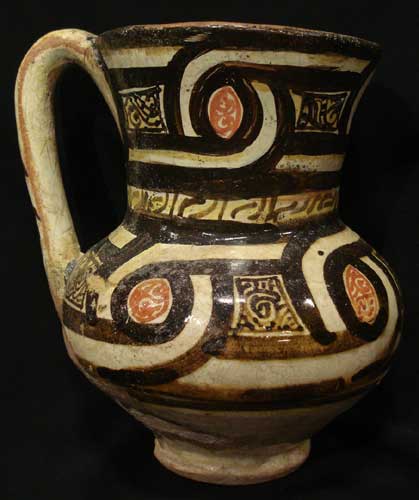
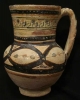
Slip Painted Nishapur Jug - AMD.144, Origin: Central Asia, Circa: 900 AD to 1000 AD, Dimensions: 7" (17.8cm) high x 6.1" (15.5cm) wide, Collection: Islamic Art, Style: More »
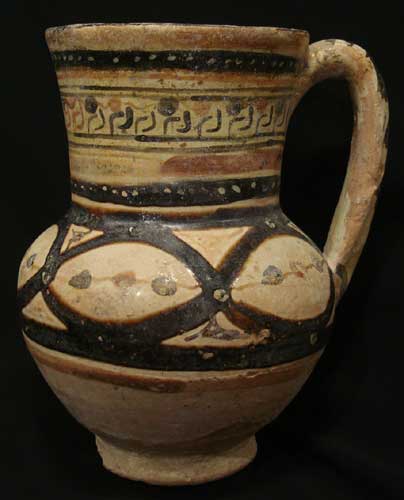
Slip Painted Nishapur Jug - AMD.144, Origin: Central Asia, Circa: 900 AD to 1000 AD, Dimensions: 7" (17.8cm) high x 6.1" (15.5cm) wide, Collection: Islamic Art, Style: Nishapur Ware, Medium: Buff Earthenware, Condition: Extra Fine. Many Samanid slipwares are decorated with abstract designs such as the ovals around the body and pseudo glyphs on the neck of this early and rare jug. Later examples sport palmettes and scrolls. The technical and artistic quality, in the crispness of execution and sureness of placing are noteworthy even on this more primitive example. This magnificent earthenware jug, which reflects a simpler decoration, exerts as much charm as any other one might see from a later more sophisticated time. It features a white slip with black, olive, white and red slip decoration under a transparent glaze. « Less
|
|
Ancient Near East
|
|
|
|
|
| Vendor Details |
Close |
| Contact Info : |
| Barakat Gallery |
| 405 North Rodeo Drive |
| Beverly Hills |
| California-90210 |
| USA |
| Email : barakat@barakatgallery.com |
| Phone : 310.859.8408 |
|
|
|
|
|
|
Price :
$5000.00
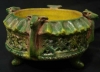
Green Glazed Dish with Moulded Ram Heads - AMD.145, Origin: Central Asia, Circa: 800 AD to 1200 AD, Dimensions: 3.7" (9.4cm) high x 6.7" (17.0cm) wide, Collection: Islamic More »
Green Glazed Dish with Moulded Ram Heads - AMD.145, Origin: Central Asia, Circa: 800 AD to 1200 AD, Dimensions: 3.7" (9.4cm) high x 6.7" (17.0cm) wide, Collection: Islamic Art, Medium: Glazed Earthenware. « Less
|
|
Ancient Near East
|
|
|
|
|
| Vendor Details |
Close |
| Contact Info : |
| Barakat Gallery |
| 405 North Rodeo Drive |
| Beverly Hills |
| California-90210 |
| USA |
| Email : barakat@barakatgallery.com |
| Phone : 310.859.8408 |
|
|
|
|
|
|
|
|

|