|
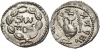
Obverse: Laureate Head of Apollo Reverse: Zeus Labraundos Standing Holding a Labrys and a Spear The Achaemenid kings, ruling a land empire too vast to be governed from Persepolis, divided their territory into twenty districts, to be administered by satraps. These governors were responsible for all military and fiscal affairs within their provinces, and many quickly followed the route to wealth and power. Using their autonomy to its fullest, the satraps governing the eastern Greek states gained control of the wealth of Asia Minor, represented by the region's productive mines and the profitable trade routes between east and west. These factors played a role in the development of the earliest coinage from Asia Minor. The satraps of Caria, starting with Hyssaldomos, would rule as a virtually independent dynasty for almost a century, strengthening their own position against that of their ostensible overlord, the Persian king in far Persepolis. Hekatomnos struck the first coins for the Carian satrapy, copying the lion types of Miletos. His later issues introduced the type that would become the emblem of the dynasty, the figure of Zeus Labraundos, whose temple was near Mylasa, the birthplace of Hekatomnos. Hekatomnos died in 377 BC, to be followed in succession by each of his three sons, Maussollos, Hidrieus and Pixodaros. Maussollos expanded his territory at the expense of his neighboring satraps and in defiance of the Persian king. He moved the capital from Mylasa to Halikarnassos, at which point the facing head of Apollo/Helios becomes the standard obverse type for the Carian tetradrachm. Although condemned by the Greek authors for his avarice and thirst for power, the satrap was acknowledged as a man of culture, embellishing his capital with remarkable architecture (his Mausoleum being one of the Wonders of the Ancient World), and encouraging the study of science and art. Hidrieus continued in his brother's footsteps and added the islands of Chios, Kos and Rhodes to his domain, three important centers of commerce which had until then managed to fend off the growing Carian empire (which by now it was in all but name). Origin: Eastern Mediterranean Circa: 353 BC to 344 BC Collection: Numismatics Style: Carian Medium: Silver
Antique Coins
Ancient coins
|