|
Antiques
|
|
 |
|
|
|
Price :
$5000.00
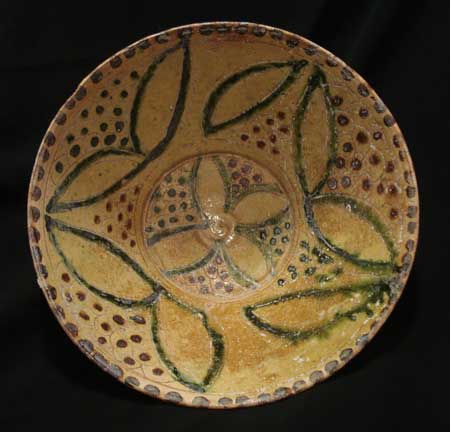
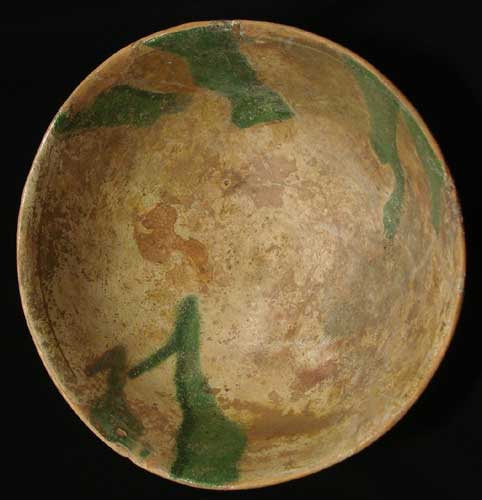
Islamic Glazed Bowl - AMD.235, Origin: Central Asia, Circa: 800 AD to 1000 AD, Dimensions: 3.9" (9.9cm) high x 8.4" (21.3cm) wide, Collection: Islamic Art, Medium: Glazed More »
Islamic Glazed Bowl - AMD.235, Origin: Central Asia, Circa: 800 AD to 1000 AD, Dimensions: 3.9" (9.9cm) high x 8.4" (21.3cm) wide, Collection: Islamic Art, Medium: Glazed Earthenware. « Less
|
|
Ancient Near East
|
|
|
|
|
| Vendor Details |
Close |
| Contact Info : |
| Barakat Gallery |
| 405 North Rodeo Drive |
| Beverly Hills |
| California-90210 |
| USA |
| Email : barakat@barakatgallery.com |
| Phone : 310.859.8408 |
|
|
|
|
|
|
Price :
$9000.00
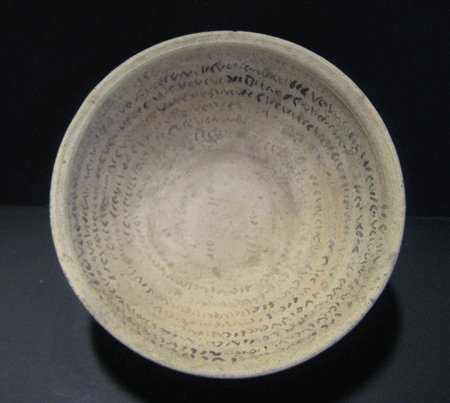
Inscribed with magic texts, these bowls were used to ward off evil spirits and protect family and property. Unearthed at relatively high levels of excavation, they were More »
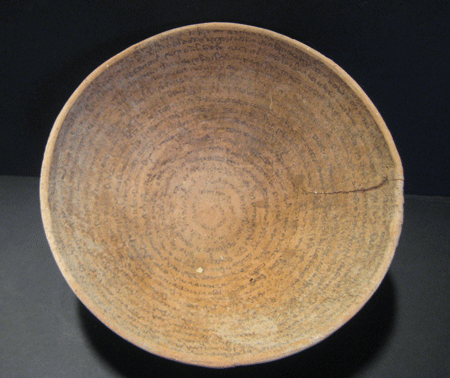
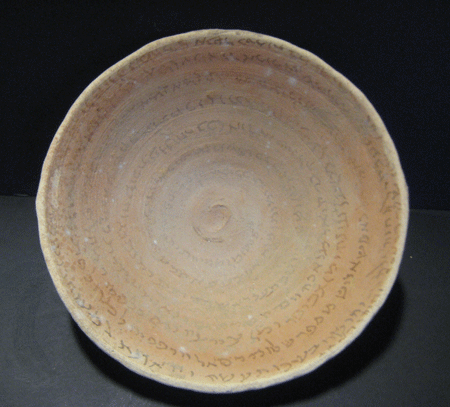
Inscribed with magic texts, these bowls were used to ward off evil spirits and protect family and property. Unearthed at relatively high levels of excavation, they were neglected by the nineteenth century pioneers of Mesopotamian archaeology who were more interested in discovering palace foundations and large-scale sculpture. In more recent years however their importance has been recognised and they have been studied in-depth.The incantations were written in a variety of Aramaic dialects including Jewish Aramaic, Mandaic and Syriac. There are also examples written in Pseudo-script, presumably by less literate scribes. Although the texts are not dated they are generally assigned to the late Sassanian/ early Islamic period (6th-8th century A.D.). Their main function was to trap evil spirits and they were often placed upside down at the corners of rooms, or built into foundations or cemeteries. The texts sometimes instruct them to be placed ‘at the four corners (of the room)’ for extra protection. The names of the clients for whom the bowls were made can be divided into two main categories- Semitic and Persian. However this is not always a reliable guide to their ethnicity. Jewish influence on the Mandaic inscriptions was minimal but is pronounced in the Aramaic incantations. Many of the scribes may have been Jewish or trained by Jews, and the Hebrew Bible is frequently quoted. Terracotta Incantation Bowl - LO.763Origin: Mesopotamia Circa: 500 AD to 800 ADDimensions: 2.5 " (6.4cm) high x 6.9 " (17.5cm) wide Collection: Near Eastern medium: Terracotta
« Less
|
|
Ancient Near East
|
|
|
|
|
| Vendor Details |
Close |
| Contact Info : |
| Barakat Gallery |
| 405 North Rodeo Drive |
| Beverly Hills |
| California-90210 |
| USA |
| Email : barakat@barakatgallery.com |
| Phone : 310.859.8408 |
|
|
|
|
|
|

Price :
Contact Dealer
Garrus, Champlevé Dish - AMD.236, Origin: Central Asia, attributed to Garrus, Circa: 1000 AD to 1300 AD, Dimensions: 4.5" (11.4cm) high x 10.5" (26.7cm) wide, Collection: More »
Garrus, Champlevé Dish - AMD.236, Origin: Central Asia, attributed to Garrus, Circa: 1000 AD to 1300 AD, Dimensions: 4.5" (11.4cm) high x 10.5" (26.7cm) wide, Collection: Islamic Art, Style: Garrus or Champlevé, Medium: Fritware, Condition: Restored. « Less
|
|
Ancient Near East
|
|
|
|
|
| Vendor Details |
Close |
| Contact Info : |
| Barakat Gallery |
| 405 North Rodeo Drive |
| Beverly Hills |
| California-90210 |
| USA |
| Email : barakat@barakatgallery.com |
| Phone : 310.859.8408 |
|
|
|
|
|
|
_MEIJI,JAPANESE.jpg)
Price :
$1200.00
Kutani Imari Kannon figurine of Kannon(Guanyin) fine Imari,detailed moriage, exquisite hand painted details,delicate gilt work.
See Millers Chinese and Japanese Antiques More »
Kutani Imari Kannon figurine of Kannon(Guanyin) fine Imari,detailed moriage, exquisite hand painted details,delicate gilt work.
See Millers Chinese and Japanese Antiques page 144. This figurine is even better! Signed in Kanji 2 character mark on base.
Dimensions: 24 1/2"(62cm) Condition: Excellent. No damage, frits or hairlines « Less
|
|
Asian Decorative Arts
|
|
|
|
|
| Vendor Details |
Close |
| Contact Info : |
| Sherri Garner |
| Email : mzdragonwoman@aol.com |
| Phone : 7164178593 |
|
|
|
|
|
|
Price :
Contact Dealer
Inscribed with magic texts, these bowls were used to ward off evil spirits and protect family and property. Unearthed at relatively high levels of excavation, they were More »
Inscribed with magic texts, these bowls were used to ward off evil spirits and protect family and property. Unearthed at relatively high levels of excavation, they were neglected by the nineteenth century pioneers of Mesopotamian archaeology who were more interested in discovering palace foundations and large-scale sculpture. In more recent years however their importance has been recognised and they have been studied in-depth.The incantations were written in a variety of Aramaic dialects including Jewish Aramaic, Mandaic and Syriac. There are also examples written in Pseudo-script, presumably by less literate scribes. Although the texts are not dated they are generally assigned to the late Sassanian/ early Islamic period (6th-8th century A.D.). Their main function was to trap evil spirits and they were often placed upside down at the corners of rooms, or built into foundations or cemeteries. The texts sometimes instruct them to be placed ‘at the four corners (of the room)’ for extra protection. The names of the clients for whom the bowls were made can be divided into two main categories- Semitic and Persian. However this is not always a reliable guide to their ethnicity. Jewish influence on the Mandaic inscriptions was minimal but is pronounced in the Aramaic incantations. Many of the scribes may have been Jewish or trained by Jews, and the Hebrew Bible is frequently quoted. Terracotta Incantation Bowl - LO.763Origin: Mesopotamia Circa: 500 AD to 800 ADDimensions: 2.5 " (6.4cm) high x 6.9 " (17.5cm) wide Collection: Near Eastern medium: Terracotta « Less
|
|
Ancient Near East
|
|
|
|
|
| Vendor Details |
Close |
| Contact Info : |
| Barakat Gallery |
| 405 North Rodeo Drive |
| Beverly Hills |
| California-90210 |
| USA |
| Email : barakat@barakatgallery.com |
| Phone : 310.859.8408 |
|
|
|
|
|
|
Price :
$1200.00
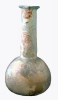
As we hold this glass vessel in our hands today, we can imagine who might have held it this way when Rome ruled the world. Was it some centurion in the Roman legions, seeking More »
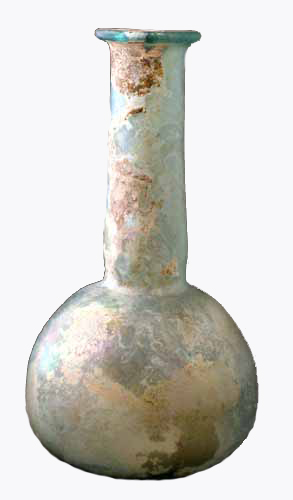
As we hold this glass vessel in our hands today, we can imagine who might have held it this way when Rome ruled the world. Was it some centurion in the Roman legions, seeking an appropriate gift for a loved one far away? A physician, trained on the island of Kos, who poured healing medicines from its depths? A dark-eyed beauty, who anointed herself with its fragrant perfumes? We can never know for certain whose gestures we echo when we hold this vase, but in its presence, we connect in an intimate way with the glories of a vanished world. - (GF.0281) « Less
|
|
Ancient Roman
|
|
|
|
|
| Vendor Details |
Close |
| Contact Info : |
| Barakat Gallery |
| 405 North Rodeo Drive |
| Beverly Hills |
| California-90210 |
| USA |
| Email : barakat@barakatgallery.com |
| Phone : 310.859.8408 |
|
|
|
|
|
|

Price :
$650.00
Fine quality European Lowlands (Dutch or Belgian) porcelain colts figurine. These are atheletic colts, hunters, or dressage... most likely Trahkeners or Warmbloods, and they More »
Fine quality European Lowlands (Dutch or Belgian) porcelain colts figurine. These are atheletic colts, hunters, or dressage... most likely Trahkeners or Warmbloods, and they are delightful. There is a small faded blue signature mark on underside but it is unreadable.
Dimensions: 8 3/4"(22cm) height
10"(25.50cm) width of base
Condition: Excellent, no frits chips or any damage « Less
|
|
Antique Figurines & Statues
|
|
|
|
|
| Vendor Details |
Close |
| Contact Info : |
| Sherri Garner |
| Email : mzdragonwoman@aol.com |
| Phone : 7164178593 |
|
|
|
|
|
|
Price :
Contact Dealer
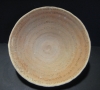
Inscribed with magic texts, these bowls were used to ward off evil spirits and protect family and property. Unearthed at relatively high levels of excavation, they were More »
Inscribed with magic texts, these bowls were used to ward off evil spirits and protect family and property. Unearthed at relatively high levels of excavation, they were neglected by the nineteenth century pioneers of Mesopotamian archaeology who were more interested in discovering palace foundations and large-scale sculpture. In more recent years however their importance has been recognised and they have been studied in-depth.The incantations were written in a variety of Aramaic dialects including Jewish Aramaic, Mandaic and Syriac. There are also examples written in Pseudo-script, presumably by less literate scribes. Although the texts are not dated they are generally assigned to the late Sassanian/ early Islamic period (6th-8th century A.D.). Their main function was to trap evil spirits and they were often placed upside down at the corners of rooms, or built into foundations or cemeteries. The texts sometimes instruct them to be placed ‘at the four corners (of the room)’ for extra protection. The names of the clients for whom the bowls were made can be divided into two main categories- Semitic and Persian. However this is not always a reliable guide to their ethnicity. Jewish influence on the Mandaic inscriptions was minimal but is pronounced in the Aramaic incantations. Many of the scribes may have been Jewish or trained by Jews, and the Hebrew Bible is frequently quoted. Terracotta Incantation Bowl - LO.763Origin: Mesopotamia Circa: 500 AD to 800 ADDimensions: 2.5 " (6.4cm) high x 6.9 " (17.5cm) wide Collection: Near Eastern medium: Terracotta
« Less
|
|
Ancient Near East
|
|
|
|
|
| Vendor Details |
Close |
| Contact Info : |
| Barakat Gallery |
| 405 North Rodeo Drive |
| Beverly Hills |
| California-90210 |
| USA |
| Email : barakat@barakatgallery.com |
| Phone : 310.859.8408 |
|
|
|
|
|
|
Price :
$1800.00
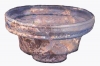
Blue as the winter sky, this lovely bowl may once have adorned the table of a Roman citizen. Its shape is elegant, simple but timeless in its appeal. As we hold it in our More »
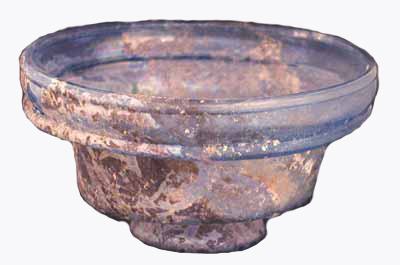
Blue as the winter sky, this lovely bowl may once have adorned the table of a Roman citizen. Its shape is elegant, simple but timeless in its appeal. As we hold it in our hands today, admiring its contours, we echo the gestures of its ancient owner. We know nothing else about that individual, not his name or his profession, yet we share with him (or her) our pleasure in this bowl's beauty. These feelings unite us in a common mood that transcends the centuries. We feel a bond, intimate and real, that connects us with a vanished life. - (GF.0284) « Less
|
|
Ancient Roman
|
|
|
|
|
| Vendor Details |
Close |
| Contact Info : |
| Barakat Gallery |
| 405 North Rodeo Drive |
| Beverly Hills |
| California-90210 |
| USA |
| Email : barakat@barakatgallery.com |
| Phone : 310.859.8408 |
|
|
|
|
|
|
Price :
Contact Dealer
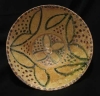
Earthenware Dish - AMD.248, Origin: Central Asia, Circa: 1100 AD to 1200 AD, Dimensions: 3.5" (8.9cm) high x 7.5" (19.1cm) wide, Collection: Islamic Art, Style: Sgraffiato, More »
Earthenware Dish - AMD.248, Origin: Central Asia, Circa: 1100 AD to 1200 AD, Dimensions: 3.5" (8.9cm) high x 7.5" (19.1cm) wide, Collection: Islamic Art, Style: Sgraffiato, Medium: Buff Earthenware, Condition: Extra Fine, The incised wares of Eastern Ancient Iran (present day Afghanistan) have only emerged in fairly recent archeological publications. They represent a very widespread and diverse manufacture. Significant quantities have survived in very good condition, like the associated fritwares. « Less
|
|
Ancient Near East
|
|
|
|
|
| Vendor Details |
Close |
| Contact Info : |
| Barakat Gallery |
| 405 North Rodeo Drive |
| Beverly Hills |
| California-90210 |
| USA |
| Email : barakat@barakatgallery.com |
| Phone : 310.859.8408 |
|
|
|
|
|
|
|
|

|


_MEIJI,JAPANESE.jpg)