Price :
Contact Dealer
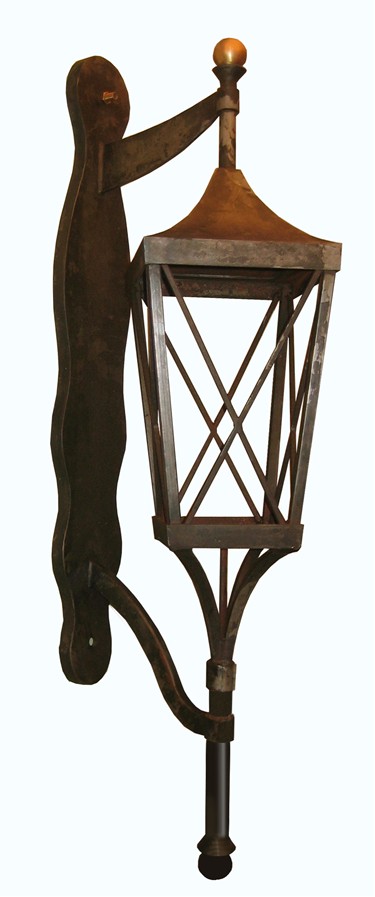
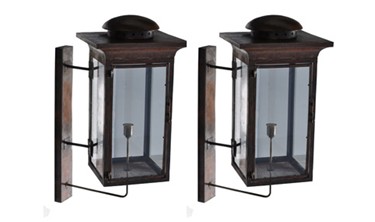
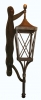
4 Sided Iron Wall lantern. This rustic fixture has one MB socket, no glass and square rod X-details on each side panel.
4 Sided Iron Wall lantern. This rustic fixture has one MB socket, no glass and square rod X-details on each side panel. « Less
|
|
Antique Sconces
|
|
|
|
|
| Vendor Details |
Close |
| Contact Info : |
| Architectural Detail Group, Inc. |
| 29397 Agoura Road #110 |
| Agoura Hills |
| California-91301 |
| USA |
| Email : Gerald@adgmail.com |
| Phone : 818-597-9494 |
|
|
|
|
|
|
Price :
$900.00
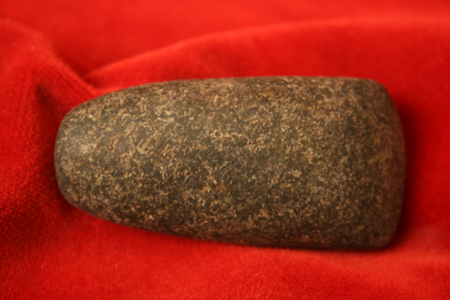
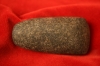
Origin: Egypt (Sinai)
Circa: 6000 BC to 4000 BC
Dimensions: 2.5" (6.4cm) high x 1.25" (3.2cm) wide
Collection: Egyptian
Style: Neolithic
Medium: Stone
Origin: Egypt (Sinai)
Circa: 6000 BC to 4000 BC
Dimensions: 2.5" (6.4cm) high x 1.25" (3.2cm) wide
Collection: Egyptian
Style: Neolithic
Medium: Stone « Less
|
|
Ancient Weapons
|
|
|
|
|
| Vendor Details |
Close |
| Contact Info : |
| Barakat Gallery |
| 405 North Rodeo Drive |
| Beverly Hills |
| California-90210 |
| USA |
| Email : barakat@barakatgallery.com |
| Phone : 310.859.8408 |
|
|
|
|
|
|
Price :
Contact Dealer
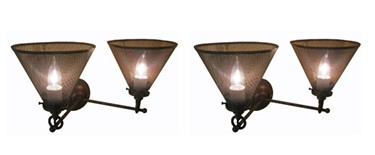
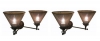
Unique 2-lite wall sconce with mesh shade over each bulb. Wall sconce can be mounted with the lights hanging up or down.
Unique 2-lite wall sconce with mesh shade over each bulb. Wall sconce can be mounted with the lights hanging up or down. « Less
|
|
Antique Sconces
|
|
|
|
|
| Vendor Details |
Close |
| Contact Info : |
| Architectural Detail Group, Inc. |
| 29397 Agoura Road #110 |
| Agoura Hills |
| California-91301 |
| USA |
| Email : Gerald@adgmail.com |
| Phone : 818-597-9494 |
|
|
|
|
|
|
Price :
$675.00
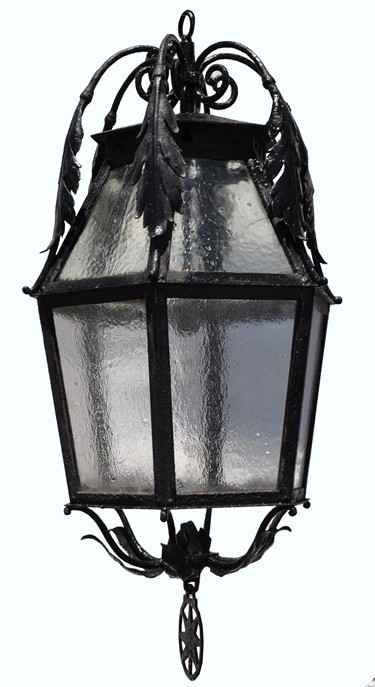
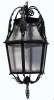
6 Sided Black Pendant with leafy scrolls at top and hanging wrought iron star detail at bottom.
(20% DESIGNER DISCOUNT)
6 Sided Black Pendant with leafy scrolls at top and hanging wrought iron star detail at bottom.
(20% DESIGNER DISCOUNT) « Less
|
|
Antique Pendant Lights
|
|
|
|
|
| Vendor Details |
Close |
| Contact Info : |
| Architectural Detail Group, Inc. |
| 29397 Agoura Road #110 |
| Agoura Hills |
| California-91301 |
| USA |
| Email : Gerald@adgmail.com |
| Phone : 818-597-9494 |
|
|
|
|
|
|
Price :
Contact Dealer
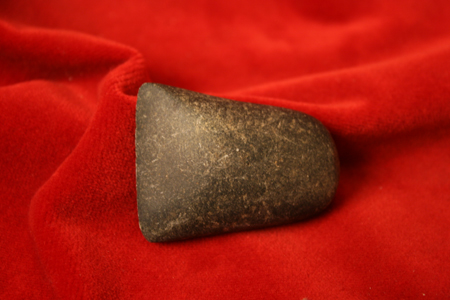
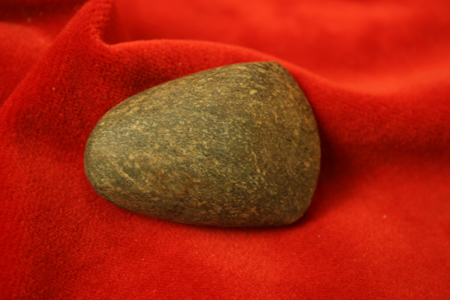
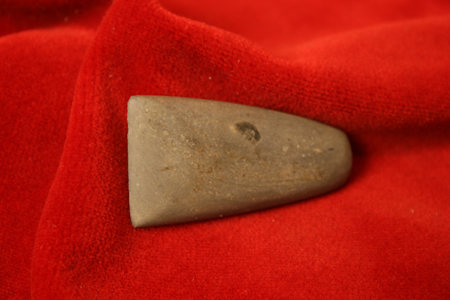
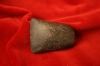
Neolithic Stone Axe Head - PF.2330dc
Origin: Egypt (Sinai)
Circa: 6000 BC to 4000 BC
Dimensions: 2" (5.1cm) high x 1.4" (3.6cm) wide
Collection: Egyptian
Style: More »
Neolithic Stone Axe Head - PF.2330dc
Origin: Egypt (Sinai)
Circa: 6000 BC to 4000 BC
Dimensions: 2" (5.1cm) high x 1.4" (3.6cm) wide
Collection: Egyptian
Style: Neolithic
Medium: Stone « Less
|
|
Ancient Weapons
|
|
|
|
|
| Vendor Details |
Close |
| Contact Info : |
| Barakat Gallery |
| 405 North Rodeo Drive |
| Beverly Hills |
| California-90210 |
| USA |
| Email : barakat@barakatgallery.com |
| Phone : 310.859.8408 |
|
|
|
|
|
|
Price :
Contact Dealer
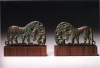
Each cast in openwork technique in the form of a striding feline, one facing right, the other facing left, holding a small equine or goat in his jaws, the feline with punched More »
Each cast in openwork technique in the form of a striding feline, one facing right, the other facing left, holding a small equine or goat in his jaws, the feline with punched legs and long ribbed tail forming a loop at the end. -(DC.8900)APairof Ordos Bronze Buckle Plaques - DC.8900Origin: China Circa: 500 BC to 100 BCDimensions: 3.38" (8.6cm) wide Collection: Near Easter Style: Ordos Medium: Bronze « Less
|
|
Ancient Asian
|
|
|
|
|
| Vendor Details |
Close |
| Contact Info : |
| Barakat Gallery |
| 405 North Rodeo Drive |
| Beverly Hills |
| California-90210 |
| USA |
| Email : barakat@barakatgallery.com |
| Phone : 310.859.8408 |
|
|
|
|
|
|

Price :
Contact Dealer
Neolithic Stone Axe Head - PF.2331dc
Origin: Egypt (Sinai)
Circa: 6000 BC to 4000 BC
Dimensions: 2" (5.1cm) high x 1.25" (3.2cm) wide
Collection: Egyptian
Style: More »
Neolithic Stone Axe Head - PF.2331dc
Origin: Egypt (Sinai)
Circa: 6000 BC to 4000 BC
Dimensions: 2" (5.1cm) high x 1.25" (3.2cm) wide
Collection: Egyptian
Style: Neolithic
Medium: Stone « Less
|
|
Ancient Weapons
|
|
|
|
|
| Vendor Details |
Close |
| Contact Info : |
| Barakat Gallery |
| 405 North Rodeo Drive |
| Beverly Hills |
| California-90210 |
| USA |
| Email : barakat@barakatgallery.com |
| Phone : 310.859.8408 |
|
|
|
|
|
|
Price :
Contact Dealer
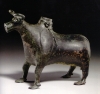
Hollow cast in the form of a bovine, standing four-square on flattened hooves, the forward flanks emphasized by raised ovals, the head facing forward, the flattened More »
Hollow cast in the form of a bovine, standing four-square on flattened hooves, the forward flanks emphasized by raised ovals, the head facing forward, the flattened cylindrical snout ridged on the upper surface, the nostrils indented, with a slit mouth, tapering horns projecting forward and curving in at their tips, large indented eyes and small triangular ears, the vessel spout protruding from between the shoulders, the rim recessed to accommodate the now-missing lid, once secured by chains )one partially preserved) attached to side loops - (DC.062A Western Asiatic Bronze Zoomorphic Vessel - DC.062Origin: Mediterranean Circa: 1200 BC to 700 BCDimensions: 6.5" (16.5cm) wide Collection: bronze animals Style: Zoomorphic Medium: Bronze « Less
|
|
Ancient Asian
|
|
|
|
|
| Vendor Details |
Close |
| Contact Info : |
| Barakat Gallery |
| 405 North Rodeo Drive |
| Beverly Hills |
| California-90210 |
| USA |
| Email : barakat@barakatgallery.com |
| Phone : 310.859.8408 |
|
|
|
|
|
|
Price :
Contact Dealer
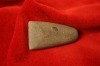
Neolithic Stone Axe Head - PF.2332dc
Origin: Egypt (Sinai)
Circa: 6000 BC to 4000 BC
Dimensions: 1.75" (4.4cm) high x 1" (2.5cm) wide
Collection: Egyptian
Style: More »
Neolithic Stone Axe Head - PF.2332dc
Origin: Egypt (Sinai)
Circa: 6000 BC to 4000 BC
Dimensions: 1.75" (4.4cm) high x 1" (2.5cm) wide
Collection: Egyptian
Style: Neolithic
Medium: Stone « Less
|
|
Ancient Weapons
|
|
|
|
|
| Vendor Details |
Close |
| Contact Info : |
| Barakat Gallery |
| 405 North Rodeo Drive |
| Beverly Hills |
| California-90210 |
| USA |
| Email : barakat@barakatgallery.com |
| Phone : 310.859.8408 |
|
|
|
|
|
|
Price :
Contact Dealer
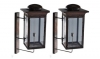
These Wall lanterns are a real conversation piece. They are made of solid copper with a natural antiqued finish with clear glass panels. Originally manufactured by ADG More »
These Wall lanterns are a real conversation piece. They are made of solid copper with a natural antiqued finish with clear glass panels. Originally manufactured by ADG lighting for a home in Texas and now converted from Gas to Electric. Designed by Gerald Olesker. More available on request. « Less
|
|
Antique Sconces
|
|
|
|
|
| Vendor Details |
Close |
| Contact Info : |
| Architectural Detail Group, Inc. |
| 29397 Agoura Road #110 |
| Agoura Hills |
| California-91301 |
| USA |
| Email : Gerald@adgmail.com |
| Phone : 818-597-9494 |
|
|
|
|
|
|