|
Antiques
|
|
 |
|
|
|
Price :
$6000.00
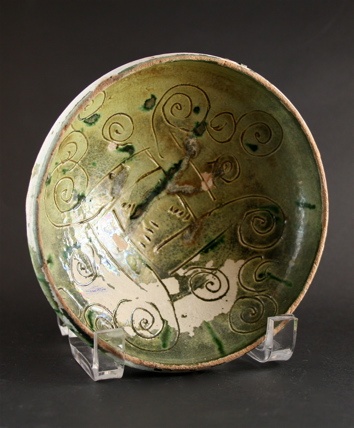
Islamic Glazed Earthenware Bowl - DAC.005, Origin: Central Asia, Circa: 1100 AD to 1300 AD, Dimensions: 2.5" (6.4cm) high x 6" (15.2cm) wide, Collection: Islamic Art, Style: More »
Islamic Glazed Earthenware Bowl - DAC.005, Origin: Central Asia, Circa: 1100 AD to 1300 AD, Dimensions: 2.5" (6.4cm) high x 6" (15.2cm) wide, Collection: Islamic Art, Style: Islamic Art, Medium: Glazed Earthenware, Condition: Extra Fine. « Less
|
|
Ancient Near East
|
|
|
|
|
| Vendor Details |
Close |
| Contact Info : |
| Barakat Gallery |
| 405 North Rodeo Drive |
| Beverly Hills |
| California-90210 |
| USA |
| Email : barakat@barakatgallery.com |
| Phone : 310.859.8408 |
|
|
|
|
|
|

Price :
$750.00
18th century French oven paddle for removing breads and other foods from the oven or heath. The wooden paddle is six feet five inches in length,a single long piece of wood More »
18th century French oven paddle for removing breads and other foods from the oven or heath. The wooden paddle is six feet five inches in length,a single long piece of wood hewn from one tree with no joinings. The paddle is a delightful decorative accent(or useful for that long oven) for your country kitchen or rustic family room. A rare French find pre French Revolution!
Dimensions: Length 6 Feet, 5 Inches Condition: As found, an early repair on the paddle « Less
|
|
Antique & Vintage Kitchen items
|
|
|
|
|
| Vendor Details |
Close |
| Contact Info : |
| Sherri Garner |
| Email : mzdragonwoman@aol.com |
| Phone : 7164178593 |
|
|
|
|
|
|
Price :
$9600.00
Inscribed with magic texts, these bowls were used to ward off evil spirits and protect family and property. Unearthed at relatively high levels of excavation, they were More »
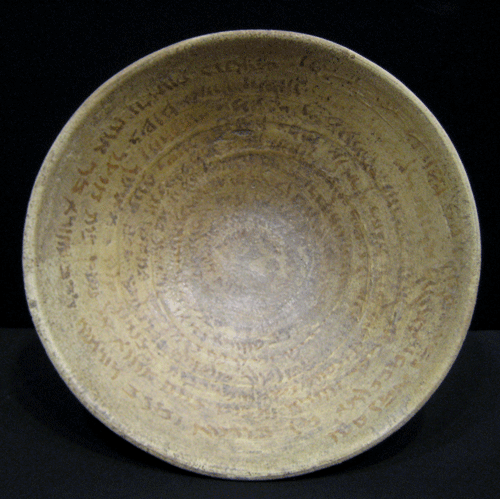
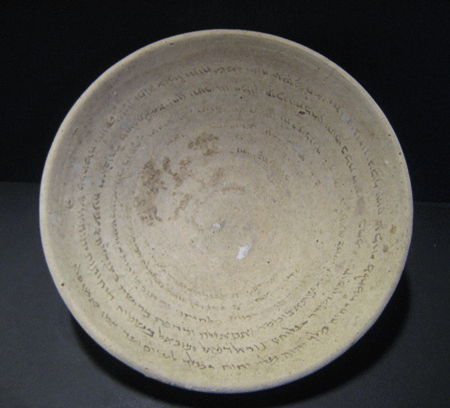
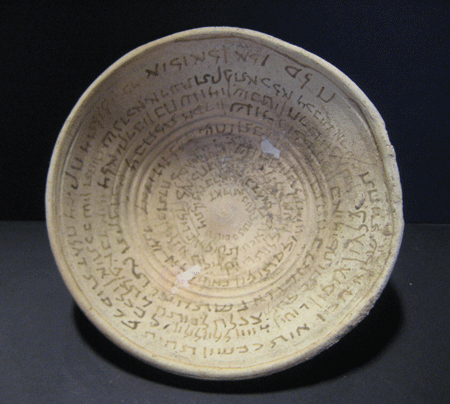
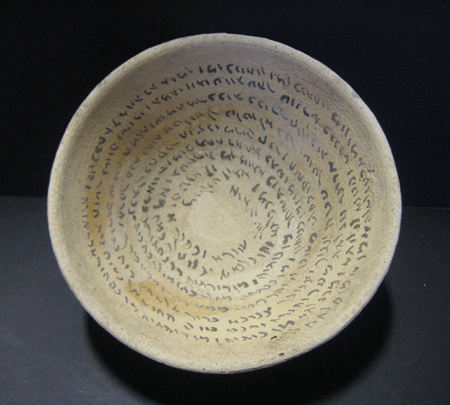
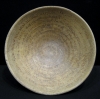
Inscribed with magic texts, these bowls were used to ward off evil spirits and protect family and property. Unearthed at relatively high levels of excavation, they were neglected by the nineteenth century pioneers of Mesopotamian archaeology who were more interested in discovering palace foundations and large-scale sculpture. In more recent years however their importance has been recognised and they have been studied in-depth.The incantations were written in a variety of Aramaic dialects including Jewish Aramaic, Mandaic and Syriac. There are also examples written in Pseudo-script, presumably by less literate scribes. Although the texts are not dated they are generally assigned to the late Sassanian/ early Islamic period (6th-8th century A.D.). Their main function was to trap evil spirits and they were often placed upside down at the corners of rooms, or built into foundations or cemeteries. The texts sometimes instruct them to be placed ‘at the four corners (of the room)’ for extra protection. The names of the clients for whom the bowls were made can be divided into two main categories- Semitic and Persian. However this is not always a reliable guide to their ethnicity. Jewish influence on the Mandaic inscriptions was minimal but is pronounced in the Aramaic incantations. Many of the scribes may have been Jewish or trained by Jews, and the Hebrew Bible is frequently quoted. Terracotta Incantation Bowl - LO.763Origin: Mesopotamia Circa: 500 AD to 800 ADDimensions: 2.5 " (6.4cm) high x 6.9 " (17.5cm) wide Collection: Near Eastern medium: Terracotta « Less
|
|
Ancient Near East
|
|
|
|
|
| Vendor Details |
Close |
| Contact Info : |
| Barakat Gallery |
| 405 North Rodeo Drive |
| Beverly Hills |
| California-90210 |
| USA |
| Email : barakat@barakatgallery.com |
| Phone : 310.859.8408 |
|
|
|
|
|
|
Price :
$6500.00
Inscribed with magic texts, these bowls were used to ward off evil spirits and protect family and property. Unearthed at relatively high levels of excavation, they were More »
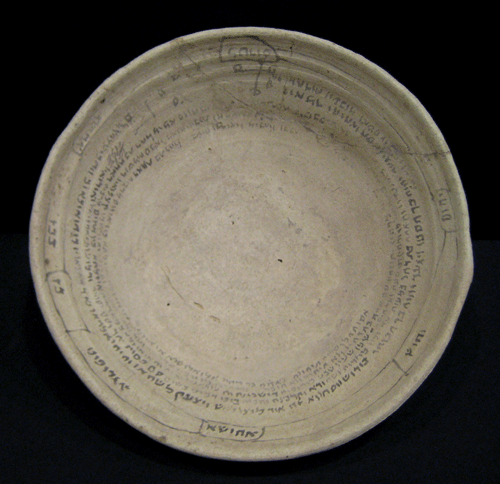
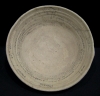
Inscribed with magic texts, these bowls were used to ward off evil spirits and protect family and property. Unearthed at relatively high levels of excavation, they were neglected by the nineteenth century pioneers of Mesopotamian archaeology who were more interested in discovering palace foundations and large-scale sculpture. In more recent years however their importance has been recognised and they have been studied in-depth.The incantations were written in a variety of Aramaic dialects including Jewish Aramaic, Mandaic and Syriac. There are also examples written in Pseudo-script, presumably by less literate scribes. Although the texts are not dated they are generally assigned to the late Sassanian/ early Islamic period (6th-8th century A.D.). Their main function was to trap evil spirits and they were often placed upside down at the corners of rooms, or built into foundations or cemeteries. The texts sometimes instruct them to be placed ‘at the four corners (of the room)’ for extra protection. The names of the clients for whom the bowls were made can be divided into two main categories- Semitic and Persian. However this is not always a reliable guide to their ethnicity. Jewish influence on the Mandaic inscriptions was minimal but is pronounced in the Aramaic incantations. Many of the scribes may have been Jewish or trained by Jews, and the Hebrew Bible is frequently quoted. Terracotta Incantation Bowl - LO.763Origin: Mesopotamia Circa: 500 AD to 800 ADDimensions: 2.5 " (6.4cm) high x 6.9 " (17.5cm) wide Collection: Near Eastern medium: Terracotta « Less
|
|
Ancient Near East
|
|
|
|
|
| Vendor Details |
Close |
| Contact Info : |
| Barakat Gallery |
| 405 North Rodeo Drive |
| Beverly Hills |
| California-90210 |
| USA |
| Email : barakat@barakatgallery.com |
| Phone : 310.859.8408 |
|
|
|
|
|
|

Price :
$2700.00
KANGXI 18th Century,Chinese (circa 1720-1740) blue and white CHINESE CHARGER or deep plate of superior caliber. Charger is 16" in diameter deep cobalt blue on fine thickly More »
KANGXI 18th Century,Chinese (circa 1720-1740) blue and white CHINESE CHARGER or deep plate of superior caliber. Charger is 16" in diameter deep cobalt blue on fine thickly potted porcelain ground with elegant assorted florals, a bird and a butterfly, all enclosed within a cross hatch and floral cavetto detailed border. The exterior of the plate bears a scrolling vine.
Exceptional size a truly stellar find.
This plate is guaranteed to be of the period. Dimensions: Diameter 16"(40.50cm)
Depth: 4"(110cm)
Condition: Excellent. Some sand pitting in the lower central plate with a few glaze flaws (see photos). Some small rim frits. No hairlines, chips or other damage.
LAYAWAY AVAILABLE. « Less
|
|
Antique Plates & Chargers
|
|
|
|
|
| Vendor Details |
Close |
| Contact Info : |
| Sherri Garner |
| Email : mzdragonwoman@aol.com |
| Phone : 7164178593 |
|
|
|
|
|
|
Price :
$5000.00
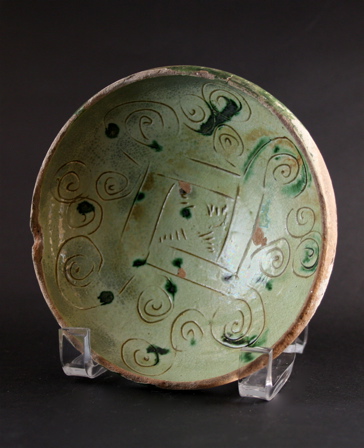
Islamic Glazed Earthenware Bowl - DAC.006, Origin: Central Asia, Circa: 1100 AD to 1300 AD, Dimensions: 2.25" (5.7cm) high x 5.75" (14.6cm) wide, Collection: Islamic Art, More »
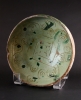
Islamic Glazed Earthenware Bowl - DAC.006, Origin: Central Asia, Circa: 1100 AD to 1300 AD, Dimensions: 2.25" (5.7cm) high x 5.75" (14.6cm) wide, Collection: Islamic Art, Style: Islamic Art, Medium: Terracotta, Condition: Extra Fine. « Less
|
|
Ancient Near East
|
|
|
|
|
| Vendor Details |
Close |
| Contact Info : |
| Barakat Gallery |
| 405 North Rodeo Drive |
| Beverly Hills |
| California-90210 |
| USA |
| Email : barakat@barakatgallery.com |
| Phone : 310.859.8408 |
|
|
|
|
|
|
Price :
Contact Dealer
Inscribed with magic texts, these bowls were used to ward off evil spirits and protect family and property. Unearthed at relatively high levels of excavation, they were More »
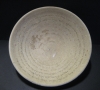
Inscribed with magic texts, these bowls were used to ward off evil spirits and protect family and property. Unearthed at relatively high levels of excavation, they were neglected by the nineteenth century pioneers of Mesopotamian archaeology who were more interested in discovering palace foundations and large-scale sculpture. In more recent years however their importance has been recognised and they have been studied in-depth.The incantations were written in a variety of Aramaic dialects including Jewish Aramaic, Mandaic and Syriac. There are also examples written in Pseudo-script, presumably by less literate scribes. Although the texts are not dated they are generally assigned to the late Sassanian/ early Islamic period (6th-8th century A.D.). Their main function was to trap evil spirits and they were often placed upside down at the corners of rooms, or built into foundations or cemeteries. The texts sometimes instruct them to be placed ‘at the four corners (of the room)’ for extra protection. The names of the clients for whom the bowls were made can be divided into two main categories- Semitic and Persian. However this is not always a reliable guide to their ethnicity. Jewish influence on the Mandaic inscriptions was minimal but is pronounced in the Aramaic incantations. Many of the scribes may have been Jewish or trained by Jews, and the Hebrew Bible is frequently quoted. Terracotta Incantation Bowl - LO.763Origin: Mesopotamia Circa: 500 AD to 800 ADDimensions: 2.5 " (6.4cm) high x 6.9 " (17.5cm) wide Collection: Near Eastern medium: Terracotta
« Less
|
|
Ancient Near East
|
|
|
|
|
| Vendor Details |
Close |
| Contact Info : |
| Barakat Gallery |
| 405 North Rodeo Drive |
| Beverly Hills |
| California-90210 |
| USA |
| Email : barakat@barakatgallery.com |
| Phone : 310.859.8408 |
|
|
|
|
|
|

Price :
$100.00
Very unusual Japanese fine and early pottery vase. Massive heavy in the manner of a tree with cherry blossoms. I can not estimate age, but this is probably early 18th More »
Very unusual Japanese fine and early pottery vase. Massive heavy in the manner of a tree with cherry blossoms. I can not estimate age, but this is probably early 18th century. There is damage to some of the petals as shown, but the quality and workmanship make the damage almost unnoticible. A most unusual and rare vase. About 20" Wanted to get some fast photos, more to follow. Please feel free to comment or ask any questions.... « Less
|
|
Antique Vases
|
|
|
|
|
| Vendor Details |
Close |
| Contact Info : |
| Sherri Garner |
| Email : mzdragonwoman@aol.com |
| Phone : 7164178593 |
|
|
|
|
|
|
Price :
Contact Dealer
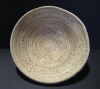
Inscribed with magic texts, these bowls were used to ward off evil spirits and protect family and property. Unearthed at relatively high levels of excavation, they were More »
Inscribed with magic texts, these bowls were used to ward off evil spirits and protect family and property. Unearthed at relatively high levels of excavation, they were neglected by the nineteenth century pioneers of Mesopotamian archaeology who were more interested in discovering palace foundations and large-scale sculpture. In more recent years however their importance has been recognised and they have been studied in-depth.The incantations were written in a variety of Aramaic dialects including Jewish Aramaic, Mandaic and Syriac. There are also examples written in Pseudo-script, presumably by less literate scribes. Although the texts are not dated they are generally assigned to the late Sassanian/ early Islamic period (6th-8th century A.D.). Their main function was to trap evil spirits and they were often placed upside down at the corners of rooms, or built into foundations or cemeteries. The texts sometimes instruct them to be placed ‘at the four corners (of the room)’ for extra protection. The names of the clients for whom the bowls were made can be divided into two main categories- Semitic and Persian. However this is not always a reliable guide to their ethnicity. Jewish influence on the Mandaic inscriptions was minimal but is pronounced in the Aramaic incantations. Many of the scribes may have been Jewish or trained by Jews, and the Hebrew Bible is frequently quoted. Terracotta Incantation Bowl - LO.763Origin: Mesopotamia Circa: 500 AD to 800 ADDimensions: 2.5 " (6.4cm) high x 6.9 " (17.5cm) wide Collection: Near Eastern medium: Terracotta
« Less
|
|
Ancient Near East
|
|
|
|
|
| Vendor Details |
Close |
| Contact Info : |
| Barakat Gallery |
| 405 North Rodeo Drive |
| Beverly Hills |
| California-90210 |
| USA |
| Email : barakat@barakatgallery.com |
| Phone : 310.859.8408 |
|
|
|
|
|
|
Price :
Contact Dealer
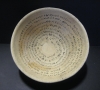
Inscribed with magic texts, these bowls were used to ward off evil spirits and protect family and property. Unearthed at relatively high levels of excavation, they were More »
Inscribed with magic texts, these bowls were used to ward off evil spirits and protect family and property. Unearthed at relatively high levels of excavation, they were neglected by the nineteenth century pioneers of Mesopotamian archaeology who were more interested in discovering palace foundations and large-scale sculpture. In more recent years however their importance has been recognised and they have been studied in-depth.The incantations were written in a variety of Aramaic dialects including Jewish Aramaic, Mandaic and Syriac. There are also examples written in Pseudo-script, presumably by less literate scribes. Although the texts are not dated they are generally assigned to the late Sassanian/ early Islamic period (6th-8th century A.D.). Their main function was to trap evil spirits and they were often placed upside down at the corners of rooms, or built into foundations or cemeteries. The texts sometimes instruct them to be placed ‘at the four corners (of the room)’ for extra protection. The names of the clients for whom the bowls were made can be divided into two main categories- Semitic and Persian. However this is not always a reliable guide to their ethnicity. Jewish influence on the Mandaic inscriptions was minimal but is pronounced in the Aramaic incantations. Many of the scribes may have been Jewish or trained by Jews, and the Hebrew Bible is frequently quoted. Terracotta Incantation Bowl - LO.763Origin: Mesopotamia Circa: 500 AD to 800 ADDimensions: 2.5 " (6.4cm) high x 6.9 " (17.5cm) wide Collection: Near Eastern medium: Terracotta
« Less
|
|
Ancient Near East
|
|
|
|
|
| Vendor Details |
Close |
| Contact Info : |
| Barakat Gallery |
| 405 North Rodeo Drive |
| Beverly Hills |
| California-90210 |
| USA |
| Email : barakat@barakatgallery.com |
| Phone : 310.859.8408 |
|
|
|
|
|
|
|
|

|