|
Antiques
|
|
 |
|
|
|
Price :
$1500.00
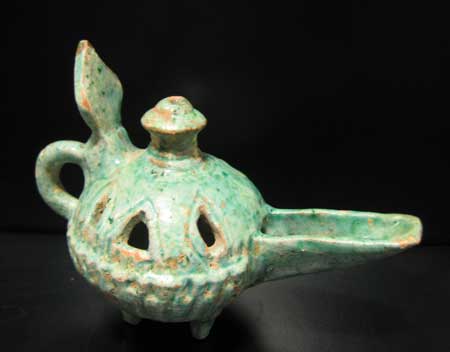
Glazed Oil Lamp - LK.019, Origin: Central Asia, Circa: 1000 AD to 1300 AD, Dimensions: 5.5" (14.0cm) high x 6.8" (17.3cm) wide, Collection: Islamic Art, Medium: Glazed More »
Glazed Oil Lamp - LK.019, Origin: Central Asia, Circa: 1000 AD to 1300 AD, Dimensions: 5.5" (14.0cm) high x 6.8" (17.3cm) wide, Collection: Islamic Art, Medium: Glazed Earthenware. Early Islamic oil lamps were a continuation of Byzantine lamps. Initially they were decorated with stylised bird, animal or foliate motifs but over time geometric and linear designs were favoured. « Less
|
|
Ancient Asian
|
|
|
|
|
| Vendor Details |
Close |
| Contact Info : |
| Barakat Gallery |
| 405 North Rodeo Drive |
| Beverly Hills |
| California-90210 |
| USA |
| Email : barakat@barakatgallery.com |
| Phone : 310.859.8408 |
|
|
|
|
|
|
Price :
$5000.00
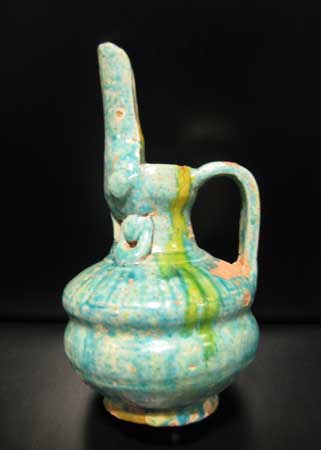
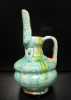
Ewer Coated in Turquoise Glaze - LK.020, Origin: Central Asia, Circa: 1200 AD to 1400 AD, Dimensions: 8.2" (20.8cm) high, Collection: Islamic Art, Style: Islamic, Medium: More »
Ewer Coated in Turquoise Glaze - LK.020, Origin: Central Asia, Circa: 1200 AD to 1400 AD, Dimensions: 8.2" (20.8cm) high, Collection: Islamic Art, Style: Islamic, Medium: Glazed Earthenware. The shape of this ewer might have been borrowed from contemporary metal vessels. It has a spherical body with a plain glazed surface, giving the ewer a great sense of simplicity. It also has a tall cylindrical neck, which on one side ends in a tall rising and pointed spout. The front part of the spout has a horizontal band to which three chains are attached. « Less
|
|
Ancient Asian
|
|
|
|
|
| Vendor Details |
Close |
| Contact Info : |
| Barakat Gallery |
| 405 North Rodeo Drive |
| Beverly Hills |
| California-90210 |
| USA |
| Email : barakat@barakatgallery.com |
| Phone : 310.859.8408 |
|
|
|
|
|
|
Price :
Contact Dealer
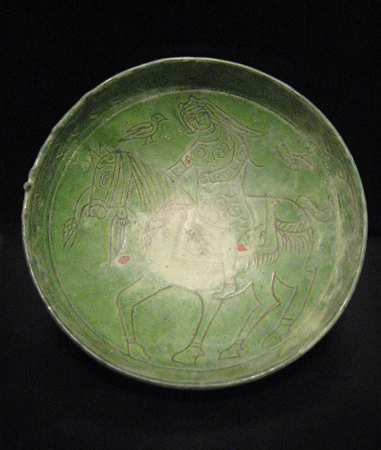
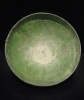
Green Glazed Incised Bowl - LK.047, Origin: Central Asia, Circa: 1300 AD to 1400 AD, Dimensions: 2.7" (6.9cm) high x 8.6" (21.8cm) wide, Collection: Islamic Art, Style: More »
Green Glazed Incised Bowl - LK.047, Origin: Central Asia, Circa: 1300 AD to 1400 AD, Dimensions: 2.7" (6.9cm) high x 8.6" (21.8cm) wide, Collection: Islamic Art, Style: Islamic, Medium: Fritware. « Less
|
|
Ancient Asian
|
|
|
|
|
| Vendor Details |
Close |
| Contact Info : |
| Barakat Gallery |
| 405 North Rodeo Drive |
| Beverly Hills |
| California-90210 |
| USA |
| Email : barakat@barakatgallery.com |
| Phone : 310.859.8408 |
|
|
|
|
|
|

Price :
$1450.00
CANTAGALLI signed majolica is treasured among collectors. This outstanding large pair of reticulated porcelain lamps has all the desireable details so sought by this More »
CANTAGALLI signed majolica is treasured among collectors. This outstanding large pair of reticulated porcelain lamps has all the desireable details so sought by this wonderful Italian Majolica manufacturer.
From the top of the incredible gilt finials to the serpents and figural heads these lamps just jumpout. Bold majolica is contrasting greens and pinks really set off a RETRO feel, with age old Italian Majolica.
The lamps are signed with the Cantagalli name, rooster and Italy.
Dimensions: To be added (very large)
Condition: Excellent. A small chip on the snout of one of the sea serpents, looks big in the enlargement, but is really minor and easily repairable. See photo #9. « Less
|
|
Antique Table & Desk Lamps
|
|
|
|
|
| Vendor Details |
Close |
| Contact Info : |
| Sherri Garner |
| Email : mzdragonwoman@aol.com |
| Phone : 7164178593 |
|
|
|
|
|
|
Price :
Contact Dealer
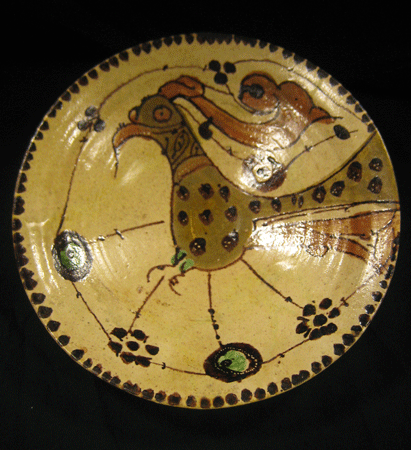
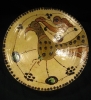
Slip Painted 'Sari' Bowl - LK.115, Origin: Central Asia, Circa: 1000 AD to 1200 AD, Dimensions: 3.1" (7.9cm) high x 11.80" (30.0cm) wide, Collection: Islamic Art, Style: Sari More »
Slip Painted 'Sari' Bowl - LK.115, Origin: Central Asia, Circa: 1000 AD to 1200 AD, Dimensions: 3.1" (7.9cm) high x 11.80" (30.0cm) wide, Collection: Islamic Art, Style: Sari Ware, Medium: Buff Earthenware, Of the later provincial pottery, Sari wares are probably the best known for their highly decorative quality and their likeable decoration. The name comes from a town in Northern Iran, at the southern tip of the Caspian Sea, to which finds were attributed. However, those finds were not properly documented and therefore there is some contention around the true provenance of the manufacture. It is however quiet widely agreed that this form of pottery was made in the Mazandran region. « Less
|
|
Ancient Asian
|
|
|
|
|
| Vendor Details |
Close |
| Contact Info : |
| Barakat Gallery |
| 405 North Rodeo Drive |
| Beverly Hills |
| California-90210 |
| USA |
| Email : barakat@barakatgallery.com |
| Phone : 310.859.8408 |
|
|
|
|
|
|
Price :
$3000.00
Inscribed with magic texts, these bowls were used to ward off evil spirits and protect family and property. Unearthed at relatively high levels of excavation, they were More »
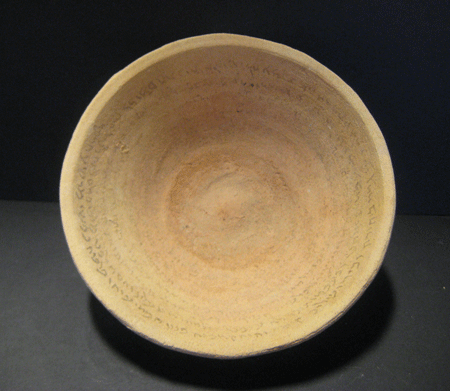
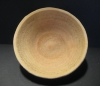
Inscribed with magic texts, these bowls were used to ward off evil spirits and protect family and property. Unearthed at relatively high levels of excavation, they were neglected by the nineteenth century pioneers of Mesopotamian archaeology who were more interested in discovering palace foundations and large-scale sculpture. In more recent years however their importance has been recognised and they have been studied in-depth.The incantations were written in a variety of Aramaic dialects including Jewish Aramaic, Mandaic and Syriac. There are also examples written in Pseudo-script, presumably by less literate scribes. Although the texts are not dated they are generally assigned to the late Sassanian/ early Islamic period (6th-8th century A.D.). Their main function was to trap evil spirits and they were often placed upside down at the corners of rooms, or built into foundations or cemeteries. The texts sometimes instruct them to be placed ‘at the four corners (of the room)’ for extra protection. The names of the clients for whom the bowls were made can be divided into two main categories- Semitic and Persian. However this is not always a reliable guide to their ethnicity. Jewish influence on the Mandaic inscriptions was minimal but is pronounced in the Aramaic incantations. Many of the scribes may have been Jewish or trained by Jews, and the Hebrew Bible is frequently quoted. Terracotta Incantation Bowl - LO.763Origin: Mesopotamia Circa: 500 AD to 800 ADDimensions: 2.5 " (6.4cm) high x 6.9 " (17.5cm) wide Collection: Near Eastern medium: Terracotta
« Less
|
|
Ancient Near East
|
|
|
|
|
| Vendor Details |
Close |
| Contact Info : |
| Barakat Gallery |
| 405 North Rodeo Drive |
| Beverly Hills |
| California-90210 |
| USA |
| Email : barakat@barakatgallery.com |
| Phone : 310.859.8408 |
|
|
|
|
|
|

Price :
Contact Dealer
Massive and unique original DEMETRE H CHIPARUS verdigris bronze seated nude sculpture. Originally foundried in Paris circa 1925-1930's by Romanian sculptor, DEMETRE H. More »
Massive and unique original DEMETRE H CHIPARUS verdigris bronze seated nude sculpture. Originally foundried in Paris circa 1925-1930's by Romanian sculptor, DEMETRE H. CHIPARUS.
This bronze personifies the geometric precision and balance which is unique to the ART DECO movement, strongly influenced by Chiparus. The original sculpture is 19" (48 1/2 cm) in length on the base measurement. Height is 17 1/2" (44 1/2cm)from top of her head to base. The nude figure is poised, sophisticated, and timeless.
This is a rare offering of an ART DECO masterpiece, Not an excuse for a rediculously overpriced knockoff. There are no repairs, or damage. Interior shows remains of castings, etc. A small (1/4 inch) hairline foundry crack is on the back of the neck of the sculpture. Otherwise, mint condition.
NOTE: DO NOT CONFUSE THIS WITH THE MYRIAD FAKES ADVERTISED AS EXACT COPIES. IT IS NOT A KNOCK OFF. AUTHENTICITY IS GUARANTEED
DIMENSIONS: Height 17 1/2"(45cm)
Length 19"(48.50cm) « Less
|
|
Art Deco Accessories
|
|
|
|
|
| Vendor Details |
Close |
| Contact Info : |
| Sherri Garner |
| Email : mzdragonwoman@aol.com |
| Phone : 7164178593 |
|
|
|
|
|
|
Price :
Contact Dealer
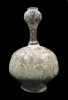
Kashan Lustre Vase - LK.112, Origin: Central Asia, Circa: 1200 AD to 1300 AD, Dimensions: 17.50" (44.5cm) high x 9.1" (23.1cm) wide, Collection: Islamic Art, Style: Kashan, More »
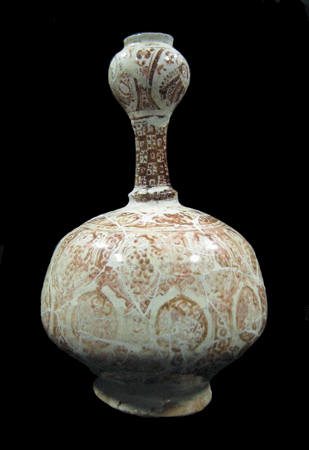
Kashan Lustre Vase - LK.112, Origin: Central Asia, Circa: 1200 AD to 1300 AD, Dimensions: 17.50" (44.5cm) high x 9.1" (23.1cm) wide, Collection: Islamic Art, Style: Kashan, Medium: Lustreware. Lustre, having been first used on glazed pottery in ninth century Iraq, became very popular between the tenth and twelfth centuries in Fatimid Egypt, and reached new heights in Seljuk Iran around about the thirteenth century before the Mongol invasions. « Less
|
|
Ancient Asian
|
|
|
|
|
| Vendor Details |
Close |
| Contact Info : |
| Barakat Gallery |
| 405 North Rodeo Drive |
| Beverly Hills |
| California-90210 |
| USA |
| Email : barakat@barakatgallery.com |
| Phone : 310.859.8408 |
|
|
|
|
|
|
Price :
$4500.00
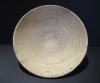
Inscribed with magic texts, these bowls were used to ward off evil spirits and protect family and property. Unearthed at relatively high levels of excavation, they were More »
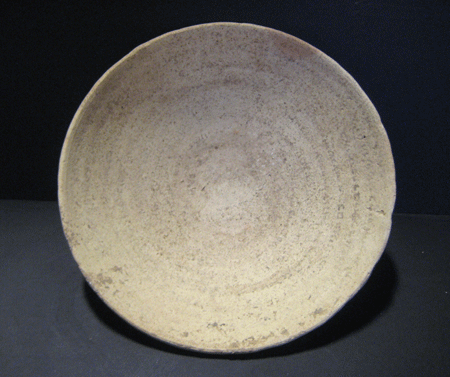
Inscribed with magic texts, these bowls were used to ward off evil spirits and protect family and property. Unearthed at relatively high levels of excavation, they were neglected by the nineteenth century pioneers of Mesopotamian archaeology who were more interested in discovering palace foundations and large-scale sculpture. In more recent years however their importance has been recognised and they have been studied in-depth.The incantations were written in a variety of Aramaic dialects including Jewish Aramaic, Mandaic and Syriac. There are also examples written in Pseudo-script, presumably by less literate scribes. Although the texts are not dated they are generally assigned to the late Sassanian/ early Islamic period (6th-8th century A.D.). Their main function was to trap evil spirits and they were often placed upside down at the corners of rooms, or built into foundations or cemeteries. The texts sometimes instruct them to be placed ‘at the four corners (of the room)’ for extra protection. The names of the clients for whom the bowls were made can be divided into two main categories- Semitic and Persian. However this is not always a reliable guide to their ethnicity. Jewish influence on the Mandaic inscriptions was minimal but is pronounced in the Aramaic incantations. Many of the scribes may have been Jewish or trained by Jews, and the Hebrew Bible is frequently quoted. Terracotta Incantation Bowl - LO.763Origin: Mesopotamia Circa: 500 AD to 800 ADDimensions: 2.5 " (6.4cm) high x 6.9 " (17.5cm) wide Collection: Near Eastern medium: Terracotta
« Less
|
|
Ancient Near East
|
|
|
|
|
| Vendor Details |
Close |
| Contact Info : |
| Barakat Gallery |
| 405 North Rodeo Drive |
| Beverly Hills |
| California-90210 |
| USA |
| Email : barakat@barakatgallery.com |
| Phone : 310.859.8408 |
|
|
|
|
|
|
Price :
$9000.00
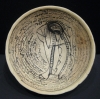
Inscribed with magic texts, these bowls were used to ward off evil spirits and protect family and property. Unearthed at relatively high levels of excavation, they were More »
Inscribed with magic texts, these bowls were used to ward off evil spirits and protect family and property. Unearthed at relatively high levels of excavation, they were neglected by the nineteenth century pioneers of Mesopotamian archaeology who were more interested in discovering palace foundations and large-scale sculpture. In more recent years however their importance has been recognised and they have been studied in-depth.The incantations were written in a variety of Aramaic dialects including Jewish Aramaic, Mandaic and Syriac. There are also examples written in Pseudo-script, presumably by less literate scribes. Although the texts are not dated they are generally assigned to the late Sassanian/ early Islamic period (6th-8th century A.D.). Their main function was to trap evil spirits and they were often placed upside down at the corners of rooms, or built into foundations or cemeteries. The texts sometimes instruct them to be placed ‘at the four corners (of the room)’ for extra protection. The names of the clients for whom the bowls were made can be divided into two main categories- Semitic and Persian. However this is not always a reliable guide to their ethnicity. Jewish influence on the Mandaic inscriptions was minimal but is pronounced in the Aramaic incantations. Many of the scribes may have been Jewish or trained by Jews, and the Hebrew Bible is frequently quoted. Terracotta Incantation Bowl - LO.763Origin: Mesopotamia Circa: 500 AD to 800 ADDimensions: 2.5 " (6.4cm) high x 6.9 " (17.5cm) wide Collection: Near Eastern medium: Terracotta « Less
|
|
Ancient Near East
|
|
|
|
|
| Vendor Details |
Close |
| Contact Info : |
| Barakat Gallery |
| 405 North Rodeo Drive |
| Beverly Hills |
| California-90210 |
| USA |
| Email : barakat@barakatgallery.com |
| Phone : 310.859.8408 |
|
|
|
|
|
|
|
|

|