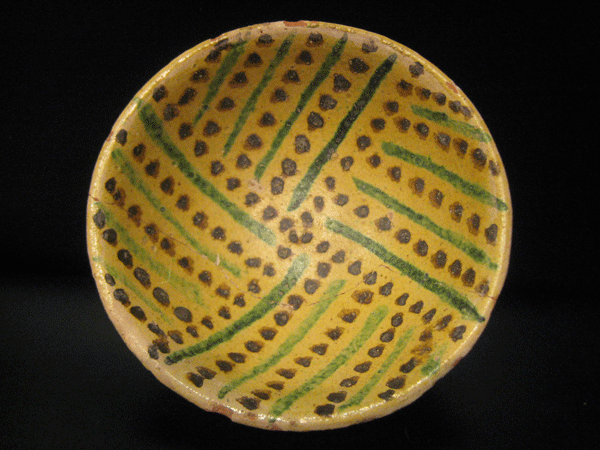
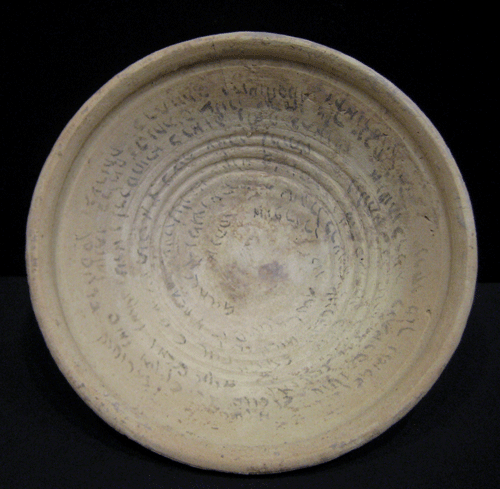
|
Antiques
|
|
 |
|
|
|

Price :
$4500.00
Inscribed with magic texts, these bowls were used to ward off evil spirits and protect family and property. Unearthed at relatively high levels of excavation, they were More »
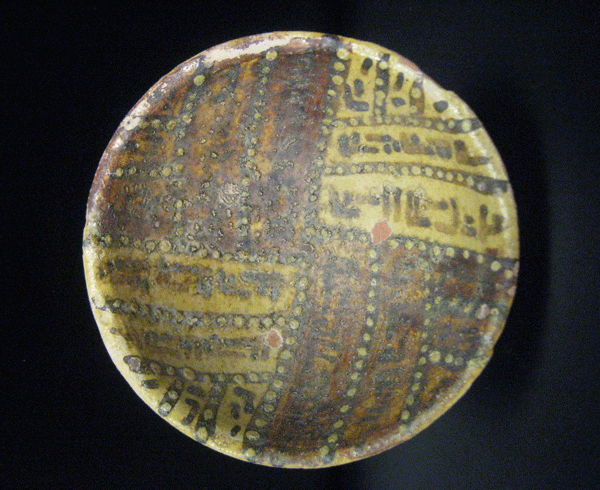
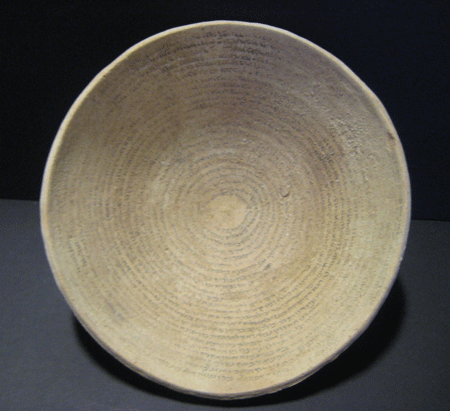
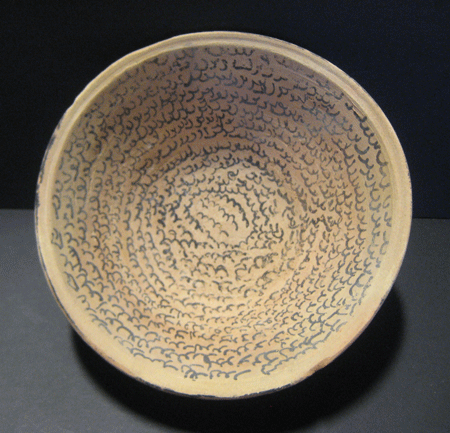
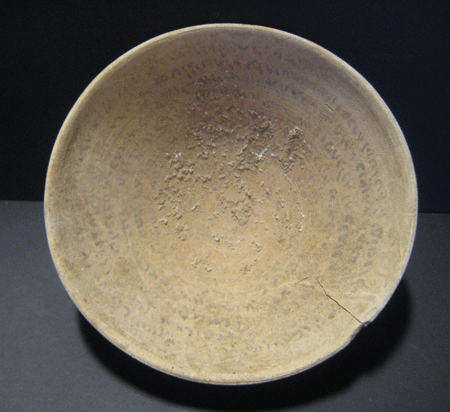
Inscribed with magic texts, these bowls were used to ward off evil spirits and protect family and property. Unearthed at relatively high levels of excavation, they were neglected by the nineteenth century pioneers of Mesopotamian archaeology who were more interested in discovering palace foundations and large-scale sculpture. In more recent years however their importance has been recognised and they have been studied in-depth.The incantations were written in a variety of Aramaic dialects including Jewish Aramaic, Mandaic and Syriac. There are also examples written in Pseudo-script, presumably by less literate scribes. Although the texts are not dated they are generally assigned to the late Sassanian/ early Islamic period (6th-8th century A.D.). Their main function was to trap evil spirits and they were often placed upside down at the corners of rooms, or built into foundations or cemeteries. The texts sometimes instruct them to be placed ‘at the four corners (of the room)’ for extra protection. The names of the clients for whom the bowls were made can be divided into two main categories- Semitic and Persian. However this is not always a reliable guide to their ethnicity. Jewish influence on the Mandaic inscriptions was minimal but is pronounced in the Aramaic incantations. Many of the scribes may have been Jewish or trained by Jews, and the Hebrew Bible is frequently quoted. Terracotta Incantation Bowl - LO.763Origin: Mesopotamia Circa: 500 AD to 800 ADDimensions: 2.5 " (6.4cm) high x 6.9 " (17.5cm) wide Collection: Near Eastern medium: Terracotta
« Less
|
|
Ancient Near East
|
|
|
|
|
| Vendor Details |
Close |
| Contact Info : |
| Barakat Gallery |
| 405 North Rodeo Drive |
| Beverly Hills |
| California-90210 |
| USA |
| Email : barakat@barakatgallery.com |
| Phone : 310.859.8408 |
|
|
|
|
|
|

Price :
$2200.00
Art Deco Russian Wolfhounds on an Aubusson carpet adorn this stunning enamel on sterling silver powder box. Beautiful detail to the enamel work, displays beautifully, More »
Art Deco Russian Wolfhounds on an Aubusson carpet adorn this stunning enamel on sterling silver powder box. Beautiful detail to the enamel work, displays beautifully, hallmarked. Diameter 3 Inches Condition: Very good, a few tiny flakes on side rim near closure. « Less
|
|
Antique Boxes
|
|
|
|
|
| Vendor Details |
Close |
| Contact Info : |
| Sherri Garner |
| Email : mzdragonwoman@aol.com |
| Phone : 7164178593 |
|
|
|
|
|
|
Price :
$2200.00
Buffware Bowl - OF.083, Origin: Central Asia, Circa: 900 AD to 1000 AD, Dimensions: 1.6" (4.1cm) high x 4.25" (10.8cm) wide, Collection: Islamic Art, Style: Islamic, Medium: More »
Buffware Bowl - OF.083, Origin: Central Asia, Circa: 900 AD to 1000 AD, Dimensions: 1.6" (4.1cm) high x 4.25" (10.8cm) wide, Collection: Islamic Art, Style: Islamic, Medium: Glazed Earthenware. « Less
|
|
Ancient Asian
|
|
|
|
|
| Vendor Details |
Close |
| Contact Info : |
| Barakat Gallery |
| 405 North Rodeo Drive |
| Beverly Hills |
| California-90210 |
| USA |
| Email : barakat@barakatgallery.com |
| Phone : 310.859.8408 |
|
|
|
|
|
|

Price :
$520.00
19th century Chinese Export Tea storage box, or tea caddy complete with original tooled pewter liner with ivory handle. This is an exceptional nice box that is all original, More »
19th century Chinese Export Tea storage box, or tea caddy complete with original tooled pewter liner with ivory handle. This is an exceptional nice box that is all original, with nicely detailed lacquer work.
Dimensions: 8" Length 5" Height
Condition: Very good. Wear appropriate for the period. « Less
|
|
Asian Decorative Arts
|
|
|
|
|
| Vendor Details |
Close |
| Contact Info : |
| Sherri Garner |
| Email : mzdragonwoman@aol.com |
| Phone : 7164178593 |
|
|
|
|
|
|
Price :
Contact Dealer
Inscribed with magic texts, these bowls were used to ward off evil spirits and protect family and property. Unearthed at relatively high levels of excavation, they were More »
Inscribed with magic texts, these bowls were used to ward off evil spirits and protect family and property. Unearthed at relatively high levels of excavation, they were neglected by the nineteenth century pioneers of Mesopotamian archaeology who were more interested in discovering palace foundations and large-scale sculpture. In more recent years however their importance has been recognised and they have been studied in-depth.The incantations were written in a variety of Aramaic dialects including Jewish Aramaic, Mandaic and Syriac. There are also examples written in Pseudo-script, presumably by less literate scribes. Although the texts are not dated they are generally assigned to the late Sassanian/ early Islamic period (6th-8th century A.D.). Their main function was to trap evil spirits and they were often placed upside down at the corners of rooms, or built into foundations or cemeteries. The texts sometimes instruct them to be placed ‘at the four corners (of the room)’ for extra protection. The names of the clients for whom the bowls were made can be divided into two main categories- Semitic and Persian. However this is not always a reliable guide to their ethnicity. Jewish influence on the Mandaic inscriptions was minimal but is pronounced in the Aramaic incantations. Many of the scribes may have been Jewish or trained by Jews, and the Hebrew Bible is frequently quoted. Terracotta Incantation Bowl - LO.763Origin: Mesopotamia Circa: 500 AD to 800 ADDimensions: 2.5 " (6.4cm) high x 6.9 " (17.5cm) wide Collection: Near Eastern medium: Terracotta
« Less
|
|
Ancient Near East
|
|
|
|
|
| Vendor Details |
Close |
| Contact Info : |
| Barakat Gallery |
| 405 North Rodeo Drive |
| Beverly Hills |
| California-90210 |
| USA |
| Email : barakat@barakatgallery.com |
| Phone : 310.859.8408 |
|
|
|
|
|
|
Price :
$6000.00
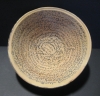
Inscribed with magic texts, these bowls were used to ward off evil spirits and protect family and property. Unearthed at relatively high levels of excavation, they were More »
Inscribed with magic texts, these bowls were used to ward off evil spirits and protect family and property. Unearthed at relatively high levels of excavation, they were neglected by the nineteenth century pioneers of Mesopotamian archaeology who were more interested in discovering palace foundations and large-scale sculpture. In more recent years however their importance has been recognised and they have been studied in-depth.The incantations were written in a variety of Aramaic dialects including Jewish Aramaic, Mandaic and Syriac. There are also examples written in Pseudo-script, presumably by less literate scribes. Although the texts are not dated they are generally assigned to the late Sassanian/ early Islamic period (6th-8th century A.D.). Their main function was to trap evil spirits and they were often placed upside down at the corners of rooms, or built into foundations or cemeteries. The texts sometimes instruct them to be placed ‘at the four corners (of the room)’ for extra protection. The names of the clients for whom the bowls were made can be divided into two main categories- Semitic and Persian. However this is not always a reliable guide to their ethnicity. Jewish influence on the Mandaic inscriptions was minimal but is pronounced in the Aramaic incantations. Many of the scribes may have been Jewish or trained by Jews, and the Hebrew Bible is frequently quoted. Terracotta Incantation Bowl - LO.763Origin: Mesopotamia Circa: 500 AD to 800 ADDimensions: 2.5 " (6.4cm) high x 6.9 " (17.5cm) wide Collection: Near Eastern medium: Terracotta
« Less
|
|
Ancient Near East
|
|
|
|
|
| Vendor Details |
Close |
| Contact Info : |
| Barakat Gallery |
| 405 North Rodeo Drive |
| Beverly Hills |
| California-90210 |
| USA |
| Email : barakat@barakatgallery.com |
| Phone : 310.859.8408 |
|
|
|
|
|
|
Price :
$3600.00
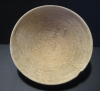
Inscribed with magic texts, these bowls were used to ward off evil spirits and protect family and property. Unearthed at relatively high levels of excavation, they were More »
Inscribed with magic texts, these bowls were used to ward off evil spirits and protect family and property. Unearthed at relatively high levels of excavation, they were neglected by the nineteenth century pioneers of Mesopotamian archaeology who were more interested in discovering palace foundations and large-scale sculpture. In more recent years however their importance has been recognised and they have been studied in-depth.The incantations were written in a variety of Aramaic dialects including Jewish Aramaic, Mandaic and Syriac. There are also examples written in Pseudo-script, presumably by less literate scribes. Although the texts are not dated they are generally assigned to the late Sassanian/ early Islamic period (6th-8th century A.D.). Their main function was to trap evil spirits and they were often placed upside down at the corners of rooms, or built into foundations or cemeteries. The texts sometimes instruct them to be placed ‘at the four corners (of the room)’ for extra protection. The names of the clients for whom the bowls were made can be divided into two main categories- Semitic and Persian. However this is not always a reliable guide to their ethnicity. Jewish influence on the Mandaic inscriptions was minimal but is pronounced in the Aramaic incantations. Many of the scribes may have been Jewish or trained by Jews, and the Hebrew Bible is frequently quoted. Terracotta Incantation Bowl - LO.763Origin: Mesopotamia Circa: 500 AD to 800 ADDimensions: 2.5 " (6.4cm) high x 6.9 " (17.5cm) wide Collection: Near Eastern medium: Terracotta « Less
|
|
Ancient Near East
|
|
|
|
|
| Vendor Details |
Close |
| Contact Info : |
| Barakat Gallery |
| 405 North Rodeo Drive |
| Beverly Hills |
| California-90210 |
| USA |
| Email : barakat@barakatgallery.com |
| Phone : 310.859.8408 |
|
|
|
|
|
|

Price :
$700.00
SO VERY FRENCH, this is an awesome 14" faience pottery figurine of a "French Postcard Madamoiselle" circa 1860's, baskets. A winsome and charming Country French accent is More »
SO VERY FRENCH, this is an awesome 14" faience pottery figurine of a "French Postcard Madamoiselle" circa 1860's, baskets. A winsome and charming Country French accent is quite sassy and bold, truly a one of a kind in workmanship and size.
Much detail as shown, from her decolette to her tiny waist and full skirts. Wonderful as she is, or try her with tiny live moss, or candies in her baskets. The statue is signed with numerous marks. Will try to decipher and add. « Less
|
|
Antique Figurines & Statues
|
|
|
|
|
| Vendor Details |
Close |
| Contact Info : |
| Sherri Garner |
| Email : mzdragonwoman@aol.com |
| Phone : 7164178593 |
|
|
|
|
|
|
Price :
$5000.00
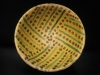
Buffware Bowl - OF.084, Origin: Central Asia, Circa: 900 AD to 1000 AD, Dimensions: 1.75" (4.4cm) high x 4.9" (12.4cm) wide, Collection: Islamic Art, Style: Islamic, Medium: More »
Buffware Bowl - OF.084, Origin: Central Asia, Circa: 900 AD to 1000 AD, Dimensions: 1.75" (4.4cm) high x 4.9" (12.4cm) wide, Collection: Islamic Art, Style: Islamic, Medium: Buff Earthenware. « Less
|
|
Ancient Asian
|
|
|
|
|
| Vendor Details |
Close |
| Contact Info : |
| Barakat Gallery |
| 405 North Rodeo Drive |
| Beverly Hills |
| California-90210 |
| USA |
| Email : barakat@barakatgallery.com |
| Phone : 310.859.8408 |
|
|
|
|
|
|
Price :
$6500.00
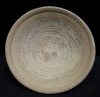
Inscribed with magic texts, these bowls were used to ward off evil spirits and protect family and property. Unearthed at relatively high levels of excavation, they were More »
Inscribed with magic texts, these bowls were used to ward off evil spirits and protect family and property. Unearthed at relatively high levels of excavation, they were neglected by the nineteenth century pioneers of Mesopotamian archaeology who were more interested in discovering palace foundations and large-scale sculpture. In more recent years however their importance has been recognised and they have been studied in-depth.The incantations were written in a variety of Aramaic dialects including Jewish Aramaic, Mandaic and Syriac. There are also examples written in Pseudo-script, presumably by less literate scribes. Although the texts are not dated they are generally assigned to the late Sassanian/ early Islamic period (6th-8th century A.D.). Their main function was to trap evil spirits and they were often placed upside down at the corners of rooms, or built into foundations or cemeteries. The texts sometimes instruct them to be placed ‘at the four corners (of the room)’ for extra protection. The names of the clients for whom the bowls were made can be divided into two main categories- Semitic and Persian. However this is not always a reliable guide to their ethnicity. Jewish influence on the Mandaic inscriptions was minimal but is pronounced in the Aramaic incantations. Many of the scribes may have been Jewish or trained by Jews, and the Hebrew Bible is frequently quoted. Terracotta Incantation Bowl - LO.763Origin: Mesopotamia Circa: 500 AD to 800 ADDimensions: 2.5 " (6.4cm) high x 6.9 " (17.5cm) wide Collection: Near Eastern medium: Terracotta
« Less
|
|
Ancient Near East
|
|
|
|
|
| Vendor Details |
Close |
| Contact Info : |
| Barakat Gallery |
| 405 North Rodeo Drive |
| Beverly Hills |
| California-90210 |
| USA |
| Email : barakat@barakatgallery.com |
| Phone : 310.859.8408 |
|
|
|
|
|
|
|
|

|