|
Sculpture
|
|
 |
|
|
|
Price :
Contact Dealer
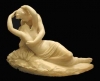
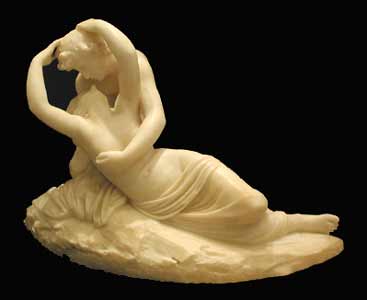
This stunning marble sculpture depicts either the moment when Cupid revives his lost love from her eternal sleep. This sculpture is based on the famous work by the Italian More »
This stunning marble sculpture depicts either the moment when Cupid revives his lost love from her eternal sleep. This sculpture is based on the famous work by the Italian master Antonio Canova. Canova treated this subject multiple times and it was one of his most successful works, combining a tender subject with an extraordinary composition full of movement and intertwining curves. Although this treatment features a wingless Cupid, the sculpture is just as tender and touching. In fact, the lack of the arching wings centers the focus on their embrace. Their arms gently wrapped around each other as Cupid lifts his love upwards, soon to kiss. The treatment of this work is as beautiful and lovely as the fable itself. Could this sculpture be by the hands of Canova himself? Perhaps it was a study used to perfect the intricate intertwining forms of the composition on a smaller scale. Perhaps this was an assignment for one of his students or a practice treatment by a member of his workshop. Any speculation of whose hand was at work here is moot. An attribution will neither diminish nor enhance the beauty and spectacle of this sculpture. Gazing upon this masterpiece, one is reminded of Psyche herself: a beauty so overwhelming as to invoke the envy of Venus herself. - (PF.5826) « Less
|
|
Sculpture
|
|
|
|
|
| Vendor Details |
Close |
| Contact Info : |
| Barakat Gallery |
| 405 North Rodeo Drive |
| Beverly Hills |
| California-90210 |
| USA |
| Email : barakat@barakatgallery.com |
| Phone : 310.859.8408 |
|
|
|
|
|
|
Price :
Contact Dealer
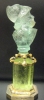
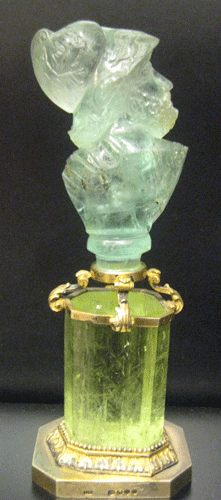
Bust of Menelaus on a Pedestal - OF.153Origin: Europe Circa: 1700 AD to 1800 AD Dimensions: 5.25" (13.3cmhighx2"(5.1cmwide Collection:Decorative Art Medium: Aquamarine, Beryl
Bust of Menelaus on a Pedestal - OF.153Origin: Europe Circa: 1700 AD to 1800 AD Dimensions: 5.25" (13.3cmhighx2"(5.1cmwide Collection:Decorative Art Medium: Aquamarine, Beryl « Less
|
|
Sculpture
|
|
|
|
|
| Vendor Details |
Close |
| Contact Info : |
| Barakat Gallery |
| 405 North Rodeo Drive |
| Beverly Hills |
| California-90210 |
| USA |
| Email : barakat@barakatgallery.com |
| Phone : 310.859.8408 |
|
|
|
|
|
|
Price :
Contact Dealer
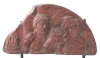
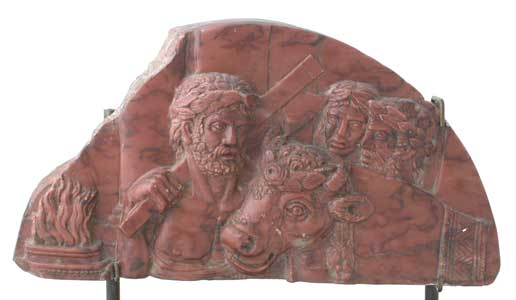
In the shape of a tondo, or composition within a circle, this scene depicts a chief priest to the left and two attendants to the right. The priest, bearded and with a full More »
In the shape of a tondo, or composition within a circle, this scene depicts a chief priest to the left and two attendants to the right. The priest, bearded and with a full head of hair adorned with a wreath, stands behind the head of the sacrificial bull and looks toward his right. His right hand holds the fasces, originally held by Roman lictores, which consisted of a bundle of reeds tied around the handle of an axe. Lictores served as the corps of body guards for important magistrates. The reeds and axe symbolized their ability to arrest, punish, and (in the earlier periods) execute. The two attendants are likewise bearded with wreathed hair. The scene takes place within a colonnaded environment with its sacrificial altar to the far left of the composition. This Neo-Roman work of art is based on actual reliefs of the Roman Imperial Period which depict sacrificial processions. The use of red jasper is in keeping with the known Roman Imperial penchant for exploiting the decorative effects of colored stone. As such it is evocative of the grandeur of Roman art at its best. References: D. E. Strong, Roman Imperial Sculpture (London 1961), figure 51 (the Cancelleria relief); figure 52 (the Suovetaurilia relief); passim; and H. Mielsch, Buntmarmore aus Rom (Berlin 1985), for the use of colored marbles by the Romans. - (PF.0174) Red Jasper Sculpture of a Roman Sacrifice-PF.0174Origin: Europe Circa: 16 th Century AD to 18 th Century ADDimensions: 4" (10.2cm) high x 7.75" (19.7cm)wide Collection:Decorative Arts Style European Medium: Jasper « Less
|
|
Sculpture
|
|
|
|
|
| Vendor Details |
Close |
| Contact Info : |
| Barakat Gallery |
| 405 North Rodeo Drive |
| Beverly Hills |
| California-90210 |
| USA |
| Email : barakat@barakatgallery.com |
| Phone : 310.859.8408 |
|
|
|
|
|
|
Price :
$7500.00
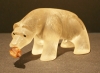
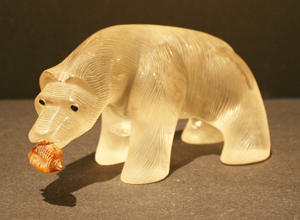
This charming sculpture of a bear with a fish in its mouth was carved from rock crystal during the 19th century. The position and shape of the form is dynamic and powerful, More »
This charming sculpture of a bear with a fish in its mouth was carved from rock crystal during the 19th century. The position and shape of the form is dynamic and powerful, and recalls the pose of polar or grizzly hears, which are particularly known for their salmon fishing in mountain streams. The lowered hindquarters, long neck and strong head with black inlaid eyes are all very accurate, the entire surface being decorated with incised lines to suggest a shaggy pelt.This is an attractive and striking piece. Rock Crystal Polar Bear With Carnelian Fish - PF.2061Origin: Russia
Circa: 19 th Century AD to 20 th Century ADCollection: European Style: Faberge Style Medium: Rock Crystal
« Less
|
|
Sculpture
|
|
|
|
|
| Vendor Details |
Close |
| Contact Info : |
| Barakat Gallery |
| 405 North Rodeo Drive |
| Beverly Hills |
| California-90210 |
| USA |
| Email : barakat@barakatgallery.com |
| Phone : 310.859.8408 |
|
|
|
|
|
|
Price :
Contact Dealer
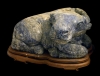
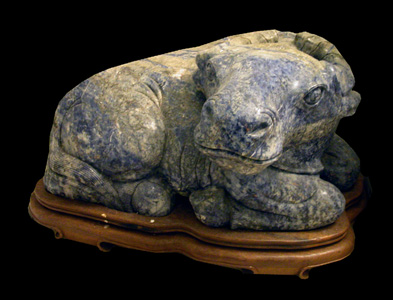
This beautiful sodalite water buffalo sits in a peaceful resting position, looking out with a soft gaze. The lines on his face are smooth and his soft eyes create a tender More »
This beautiful sodalite water buffalo sits in a peaceful resting position, looking out with a soft gaze. The lines on his face are smooth and his soft eyes create a tender gaze that reaches the viewers. The cascading lines emphasize the crouching body and each body part. The buffalo’s face and tail are soft. The non- protruding horns make the buffalo a personable, non-threatening figure. The buffalo reminds a viewer of a crouching figure-hugging himself/herself, with the legs folded inward and the body curved. One can feel how comfortable and gracefully the buffalo rests. The colors of this sodalite buffalo also generate a softer impression. The buffalo shows lighter, creamier shades of blue and beige. Although the sodalite buffalo is personable, it also shows a sign in a shape of circulating rays, which gives the figure a sense of importance and status. The detailed work by the artist, for example dotted lines and eyelashes around the eyes and layering of the horns, give the sodalite buffalo a rich quality. Adorned with colors and exquisite detail, the sodalite water buffalo caries a strong charisma as an object of art. - (PF.2932)Sodalite Water Buffalo - PF.2932Origin: China
Circa: 18 th Century AD to 19 th Century ADDimensions: 12" (30.5cm) high x 22" (55.9cm) wide Collection: Decorative Arts Style: Chinese Medium: Sodalite « Less
|
|
Sculpture
|
|
|
|
|
| Vendor Details |
Close |
| Contact Info : |
| Barakat Gallery |
| 405 North Rodeo Drive |
| Beverly Hills |
| California-90210 |
| USA |
| Email : barakat@barakatgallery.com |
| Phone : 310.859.8408 |
|
|
|
|
|
|
Price :
Contact Dealer
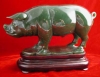
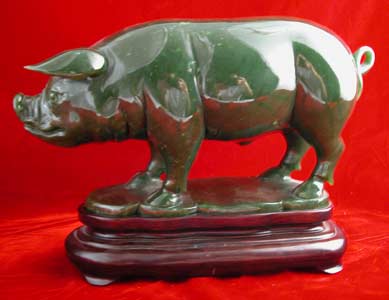
This sculpture of a standing pig is carved of genuine jade. The deeply carved lines emphasize the heaviness and solidity of the jade itself. The overall shape of the pig's More »
This sculpture of a standing pig is carved of genuine jade. The deeply carved lines emphasize the heaviness and solidity of the jade itself. The overall shape of the pig's body is smoothly and carefully worked to achieve a fine curvilinear contour of form. The beautiful line quality is presented by the predominant snout, and the wrinkled skin that seems to really hang in layers from the snout. The pig's plumpness suggests prosperity and fortune. This symbolism of wealth is also reflected in the beautifully deep, dark green jade. Not only is jade considered precious, but it is also considered a symbol for the bringer of rain. Just as the pouring rain washes away the dirt, the green jade drives away evil spirits and brings virility, prosperity, and strength. - (PF.2934)Jade Sculpture of a Pig - PF.2934Origin: Europe Circa: 19 th Century ADDimensions: 5.5" (14.0cm) high x 10.5" (26.7cm) wide Collection: Decorative Arts Style: European Medium: Jade « Less
|
|
Sculpture
|
|
|
|
|
| Vendor Details |
Close |
| Contact Info : |
| Barakat Gallery |
| 405 North Rodeo Drive |
| Beverly Hills |
| California-90210 |
| USA |
| Email : barakat@barakatgallery.com |
| Phone : 310.859.8408 |
|
|
|
|
|
|
Price :
Contact Dealer
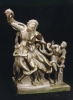
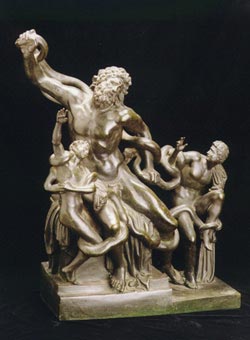
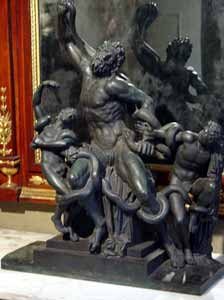
This impressive bronze sculpture represents the death of Laocoon and his sons. It is an Enlightenment reworking of an ancient sculpture dating to the 1st century BC, and More »
This impressive bronze sculpture represents the death of Laocoon and his sons. It is an Enlightenment reworking of an ancient sculpture dating to the 1st century BC, and which classes as one of the supreme masterworks of the ancient world. The sculpture is notable for its clever juxtaposition of the powerful and mature musculature of the lead figure, compared with the slimmer, athletic figures of his sons. The sinuous and powerful forms of the snakes move effortlessly around the struggling bodies and perfectly frame them.Laocoon was Poseidon’s priest, whose most famous utterance is the classic: Equo ne credite, Teucri / Quidquid id est, timeo Danaos et dona ferentes (Trojans, do not trust this horse/ whatever it may be the Greeks are to be feared, even when they come bearing gifts). He knew there was something suspicious about the vast wooden horse that had been delivered to the gates of Troy – and, indeed, it contained numerous Greek soldiers who planned to take the city by night once it was taken inside the gates.Unfortunately, Laocoon underlined his objections by throwing his spear at the horse, and at this moment two serpents, sent by Minerva, surfaced from the sea and strangled Laocoon and his two sons Antiphantes and Thymbraeus. The lines from Virgil’s Aeneid describe the scene:Bronze Sculpture ofthe Laocoon Group PF.4547Origin:Europe Circa:18th Century ADDimensions: 22.5" (57.2cm) high x 17.875" (45.4cm) wide Collection: Decorative Style: European Medium: Bronze « Less
|
|
Sculpture
|
|
|
|
|
| Vendor Details |
Close |
| Contact Info : |
| Barakat Gallery |
| 405 North Rodeo Drive |
| Beverly Hills |
| California-90210 |
| USA |
| Email : barakat@barakatgallery.com |
| Phone : 310.859.8408 |
|
|
|
|
|
|
Price :
Contact Dealer
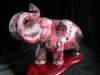
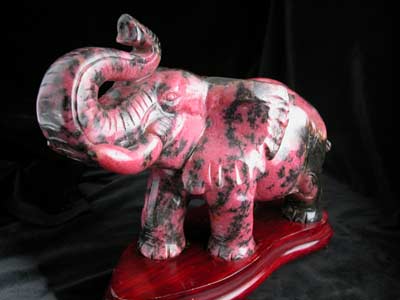
This sculpture of proudly marching elephant is carved of genuine rhodonite. The deep burgundy and black colors of the rhodonite sculpture beautifully expresses the earthiness More »
This sculpture of proudly marching elephant is carved of genuine rhodonite. The deep burgundy and black colors of the rhodonite sculpture beautifully expresses the earthiness of an elephant. Smoothly carved surface shows the elegant contour of the elephant's body. Moreover, the graceful, solid elephant displays absolute confidence and presence with its proud head held up, the large ears fanned out, and the nose raised high. The rhodonite elephant's mouth is slightly open, as if it is vocalizing its confidence. One can almost hear the voice echoing. Traditionally, elephants serve as the symbol of heaven because of the high pitch sound they make. Elephants also represent good luck and fortune, like the Hindu god of fortune--Ganesh. The proudly marching sculpture of this rich-colored elephant certainly embodies the ambitious deliverance of good luck and fortune to the viewers. - (PF.2933b)Rhodonite Sculpture of an Elephant - PF.2933b Origin: China Circa: 20 th Century ADCollection: Decorative Style: Chinese Medium: Rhodonite « Less
|
|
Sculpture
|
|
|
|
|
| Vendor Details |
Close |
| Contact Info : |
| Barakat Gallery |
| 405 North Rodeo Drive |
| Beverly Hills |
| California-90210 |
| USA |
| Email : barakat@barakatgallery.com |
| Phone : 310.859.8408 |
|
|
|
|
|
|
Price :
Contact Dealer
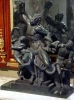
This impressive bronze sculpture represents the death of Laocoon and his sons. It is an Enlightenment reworking of an ancient sculpture dating to the 1st century BC, and More »
This impressive bronze sculpture represents the death of Laocoon and his sons. It is an Enlightenment reworking of an ancient sculpture dating to the 1st century BC, and which classes as one of the supreme masterworks of the ancient world. The sculpture is notable for its clever juxtaposition of the powerful and mature musculature of the lead figure, compared with the slimmer, athletic figures of his sons. The sinuous and powerful forms of the snakes move effortlessly around the struggling bodies and perfectly frame them.Laocoon was Poseidon’s priest, whose most famous utterance is the classic: Equo ne credite, Teucri / Quidquid id est, timeo Danaos et dona ferentes (Trojans, do not trust this horse/ whatever it may be the Greeks are to be feared, even when they come bearing gifts). He knew there was something suspicious about the vast wooden horse that had been delivered to the gates of Troy – and, indeed, it contained numerous Greek soldiers who planned to take the city by night once it was taken inside the gates.Unfortunately, Laocoon underlined his objections by throwing his spear at the horse, and at this moment two serpents, sent by Minerva, surfaced from the sea and strangled Laocoon and his two sons Antiphantes and Thymbraeus. The lines from Virgil’s Aeneid describe the scene: Bronze Sculpture of the Laocoon Group - X.0514Origin: Europe Circa: 19 th Century ADDimensions: 33" (83.8cm) high x 25.50" (64.8cm) wide Collection: Decorative Style: Neo-Classical Medium: Bronze
« Less
|
|
Sculpture
|
|
|
|
|
| Vendor Details |
Close |
| Contact Info : |
| Barakat Gallery |
| 405 North Rodeo Drive |
| Beverly Hills |
| California-90210 |
| USA |
| Email : barakat@barakatgallery.com |
| Phone : 310.859.8408 |
|
|
|
|
|
|
.gif)
Price :
Contact Dealer
This striking classical revival masterwork has been attributed to Bartolomeo Cavaceppi (c. 1716 to 1799), a sculptor and restorer fascinated by the works of classical Rome More »
This striking classical revival masterwork has been attributed to Bartolomeo Cavaceppi (c. 1716 to 1799), a sculptor and restorer fascinated by the works of classical Rome and Greece. This interest was very much in the spirit of the time. The Accademia de San Luca, which he entered in 1732, was one of numerous European art institutions where the masterworks of the classical world were used to fuel the Enlightenment. His workshop in Rome became famous as a stopping point for European tourists on the Grand Tour, and sold both recent and ancient works of art. His al l antica (Lit. “in the antique styleâ€) works were in great demand in what was essentially the jet set of the time: wealthy, well-travelled aristocrats, building collections of original and classically-inspired artworks. He also carried out major restoration works for Cardinal Albani (the nephew of Pope Clement XI, and the best known private collector of antiquities in Rome) and achieved additional fame with his publication of a three-volume work on antique designs 1768 and 1772. Cavaceppi rarely signed his work; while some of his statues were known to be his own original designs, others were confused with authentic antiquities.The current sculpture is a beautifully executed representation of Marcus Aurelius Commodus Antoninus (originally Lucius Aelius Aurelius Commodus) less felicitously known as one of the Mad Emperors, and presumably inspired by a classical original. The subject was, however, infamous in his lifetime, and is widely believed to be the worst Roman Emperor ever to have held office, in the mould of Nero and Caligula. Appointed as co-emperor in 177, he rose to full power in 180 upon the death of his father, the popular and successful Marcus Aurelius, the last of the so-called Five Good Emperors. However, he did not perpetuate his father’s heritage, and was believed to be insane by many contemporary observers. The sole tangible benefit of his reign was to halt the persecution of Christians started by his father. « Less
|
|
Sculpture
|
|
|
|
|
| Vendor Details |
Close |
| Contact Info : |
| Barakat Gallery |
| 405 North Rodeo Drive |
| Beverly Hills |
| California-90210 |
| USA |
| Email : barakat@barakatgallery.com |
| Phone : 310.859.8408 |
|
|
|
|
|
|
|
|

|

.gif)